“What you wear is how you present yourself to the world, especially today, when human contacts are so quick. Fashion is instant language.” — Miuccia Prada
“Clothes make the man. Naked people have little or no influence on society.” — Mark Twain
For some people, clothing is straightforward: wear things until they are worn out, replace them when necessary, and carry on. For others, clothes can gradually accumulate until wardrobes and drawers are overflowing with things that rarely get worn.
And yet, letting go of clothes can be surprisingly difficult.
We often hold on to clothes because they remind us of a different time in our lives, because we feel guilty about how much we paid for them, or because we think we might wear them one day. Perhaps you’re keeping clothes that no longer fit, don’t feel comfortable or simply aren’t your style anymore.
The result can be a wardrobe full of choices that actually makes getting dressed harder.
If your wardrobe feels overwhelming, you don’t need to empty the entire thing onto the floor and make hundreds of decisions in one afternoon. A gentler approach can be much more manageable.
1. Start with your reason
Before you begin, pause and ask yourself:
Why do I want to declutter my clothes?
Perhaps you:
- want a wardrobe that better reflects who you are now
- need more space
- are tired of struggling to find things
- want getting dressed to be easier
- feel overwhelmed by having too many choices
- have clothes that no longer fit your lifestyle
There is no right or wrong reason.
Writing down your reason — even just one sentence — can give you something to return to when you come across a difficult decision.
2. Start small
You don’t have to tackle your entire wardrobe at once.
In fact, if the thought of sorting hundreds of clothes feels overwhelming, don’t.
Start with one drawer, one shelf or one category. You could begin with T-shirts, jumpers, shoes or underwear.
Set a timer for 15 or 20 minutes and see what you can accomplish.
Small, manageable sessions are often more sustainable than trying to transform everything in a single day.
3. Sort your clothes into simple categories
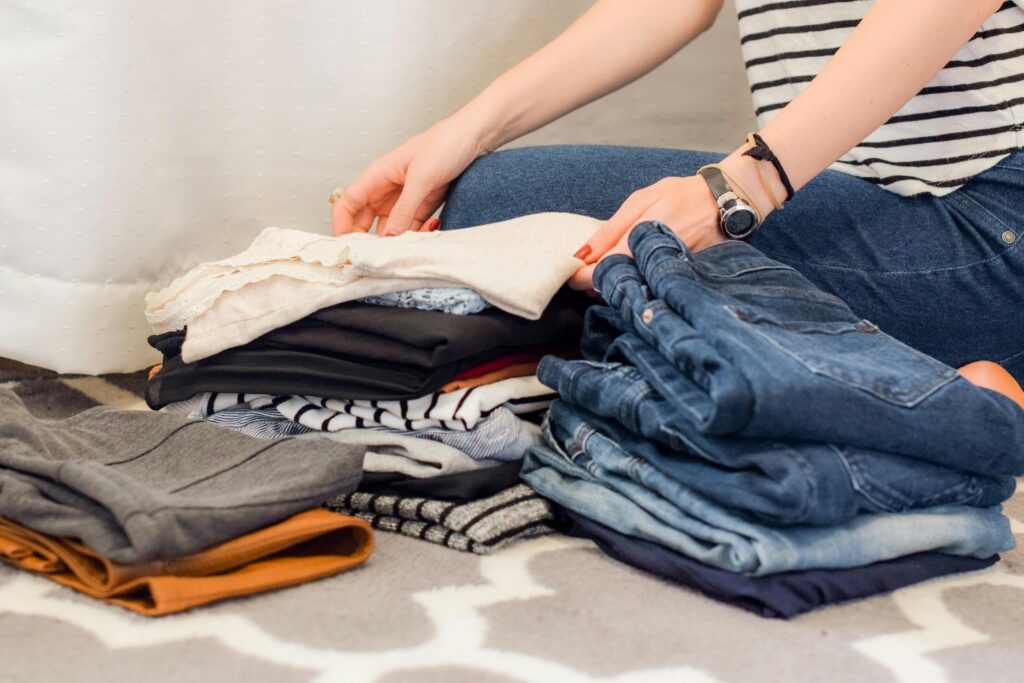
As you go through your clothes, you could create three piles:
Keep — clothes you wear, enjoy and that work for your life now.
Let go — clothes that no longer fit, are uncomfortable, worn out or simply aren’t right for you anymore.
Maybe — clothes you’re genuinely unsure about.
The maybe pile is important. You don’t have to make every decision immediately. Put those items to one side and come back to them once you’ve dealt with the easier decisions.
This can help reduce decision fatigue and make the process feel less overwhelming.
4. Ask yourself when you last wore it
A useful question is:
When did I last wear this?
If you’ve worn it recently and enjoy wearing it, that’s useful information.
If you haven’t worn it for months or even years, ask yourself why.
Perhaps:
- it doesn’t fit properly
- it’s uncomfortable
- you don’t like the way it looks on you
- you’ve forgotten you own it
- it doesn’t suit your current lifestyle
- you’re keeping it for a hypothetical occasion
Not wearing something doesn’t automatically mean you need to get rid of it. Seasonal clothing, formalwear and specialist items may naturally be worn less often.
The important question is whether the item has a real purpose in your life, rather than whether you’ve met an arbitrary wearing target.
5. Be honest about fit and comfort
A beautiful garment isn’t useful if you don’t feel comfortable wearing it.
If you’re constantly pulling it up, adjusting it, worrying about how it looks or spending the whole day wishing you’d worn something else, ask yourself:
Do I actually enjoy wearing this?
You don’t need to keep something simply because it looks good on the hanger.
Your clothes should work for you.
6. Watch out for the emotional attachments
Clothes can carry a surprising amount of emotional baggage.
You might find yourself thinking:
“But I paid a lot of money for it.”
The money has already been spent. Keeping an unworn item won’t recover the cost.
“I used to love this.”
That’s okay. You can appreciate what something meant to you without keeping it forever.
“Maybe I’ll fit into it again one day.”
If your body changes in the future, you can make decisions about your clothes then. You don’t necessarily need to keep an entire wardrobe for a hypothetical future version of yourself.
“I’ll wear it when I have somewhere special to go.”
If that occasion hasn’t happened in several years, consider how realistic it is that you will wear the item.
Sometimes the hardest part of decluttering clothes isn’t deciding whether we like them. It’s letting go of the person, occasion or possibility that they represent.
Be gentle with yourself. You don’t have to justify every decision.
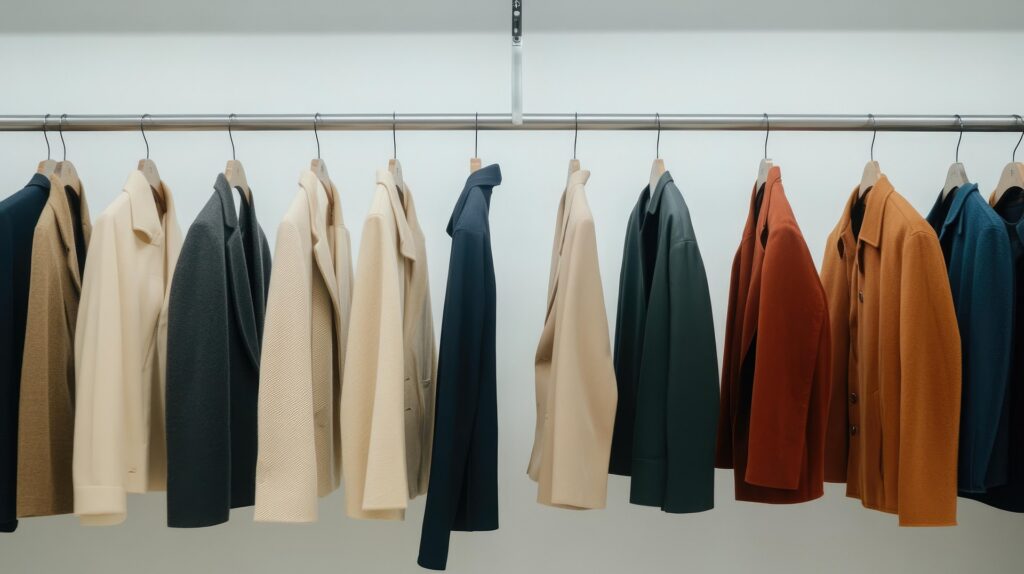
7. Try the hanger experiment
If you want to find out which clothes you actually wear, try this simple experiment.
Turn all the clothes on your wardrobe hangers so that the hooks face backwards.
Whenever you wear something, return it to the wardrobe with the hanger facing the usual way.
After several months, you’ll have a visual record of what you’ve actually been wearing.
This isn’t a rule about what you should keep. It’s simply a way of noticing your real habits rather than relying on what you think you wear.
8. Give unwanted clothes a new home
Once you’ve decided to let something go, think about what could happen to it next.
Depending on its condition, you might:
- give it to a friend or family member
- sell it
- donate it to a charity shop
- take it to a textile recycling point
- donate suitable items to a local organisation
- repair it before passing it on
Try to avoid creating a new pile of unwanted clothes that simply sits in another part of your home.
Having a plan for your exit routes makes it much easier to complete the decluttering process.
And remember: not everything is suitable for donation. Clothes that are badly damaged or unhygienic may need to be recycled or disposed of appropriately rather than passed on.
9. Create a small home for sentimental clothing
Some clothes are difficult to let go of because they represent a memory.
Perhaps it’s your university sweatshirt, your wedding outfit, a concert T-shirt or a dress you wore for an important occasion.
You don’t have to choose between keeping everything and throwing everything away.
Consider creating a small memory box for genuinely sentimental pieces.
The key word is small.
Giving sentimental clothing a defined space allows you to preserve meaningful memories without allowing them to take over your everyday wardrobe.
You could also photograph particularly meaningful items before letting them go.
10. Don’t aim for a perfect wardrobe
Decluttering isn’t about owning as few clothes as possible.
You don’t need a capsule wardrobe. You don’t need to follow a particular minimalist philosophy. And there isn’t a magic number of items that everyone should own.
The aim is simply to create a wardrobe that works for your life.
That might mean 30 items for one person and 300 for another.
What matters is whether your clothes are useful, comfortable, accessible and appropriate for the life you’re actually living.
Take your time
You don’t have to declutter your wardrobe in one heroic afternoon.
If you’re overwhelmed, start with one drawer.
If you have more energy, tackle a category.
If you only manage 20 minutes, that’s 20 minutes more than you had before.
And if you find yourself struggling with a particular item, it’s okay to put it back and come back to it later.
Decluttering should make your life easier — not harder.
The goal isn’t a perfectly tidy, minimalist wardrobe. It’s to create a collection of clothes that supports the person you are today and makes getting dressed a little easier.
Sometimes letting go of clothes isn’t about getting rid of things.
It’s about making space for what fits your life now.
Need help sorting your wardrobe? Get in touch, and I will help you turn your wardrobe from overwhelm to calm.
trabantbettina

Bettina Anna Trabant, Founder of Life Organised, your professional organising and decluttering service in East London. Eco-conscious minimalist and avid tea drinker,