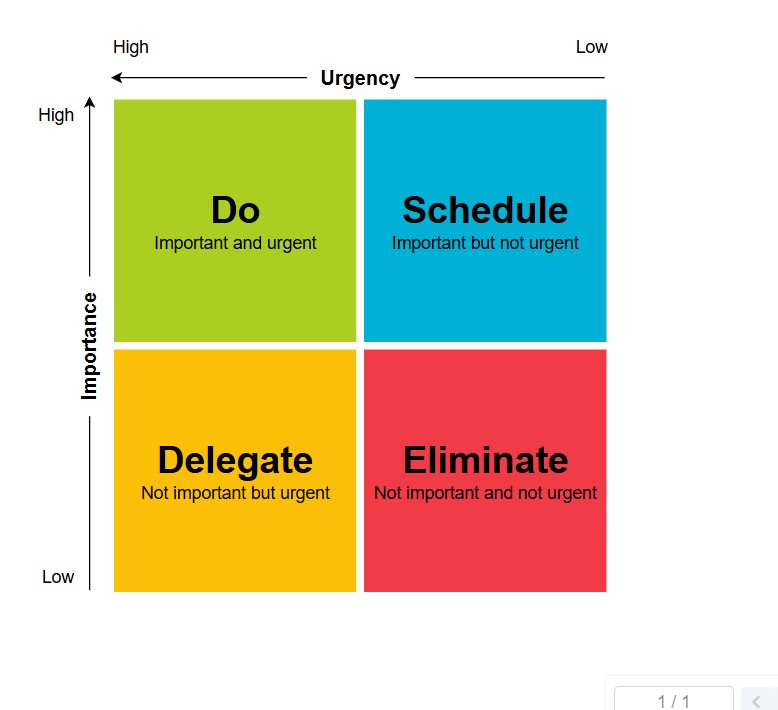
“What is important is seldom urgent and what is urgent is seldom important.”
“I have two kinds of problems, the urgent and the important. The urgent are not important, and the important are never urgent” – Dwight D. Eisenhower.
Introduction
In a world of constant notifications, deadlines, and competing priorities, deciding what deserves our attention can feel overwhelming. The Eisenhower Matrix, also known as the Urgent–Important Matrix, offers a simple yet powerful way to prioritise tasks and focus on what truly matters.
Named after Dwight D. Eisenhower, the 34th President of the United States and a former five-star general, the matrix is inspired by his observation that “What is important is seldom urgent, and what is urgent is seldom important.” This insight became the foundation of a time-management tool that remains widely used today.
Understanding the Eisenhower Matrix
Asana, the well-known project management and to-do app, gives us a simple summary of what the Eisenhower Matrix is:
“The Eisenhower Matrix is a task management tool that helps you organise and prioritise tasks by urgency and importance. Using the tool, you’ll divide your tasks into four boxes based on the tasks you’ll do first, the tasks you’ll schedule for later, the tasks you’ll delegate, and the tasks you’ll delete. “
The Eisenhower Matrix divides tasks into four quadrants based on two criteria: urgency and importance. While these two words may seem related, there is a vital difference between the two.
Urgent tasks require immediate attention and will have consequences if not completed in time. These could include paying taxes by a specific date or otherwise face a fine. Handing in your coursework or failing the class. Leaving tasks until they become urgent can lead to stress and, if done constantly, to burnout.
Essential tasks contribute to long-term goals, values, or meaningful outcomes. Tasks of this nature might include long-term projects, recurring areas of focus, such as promoting your business or maintaining a clean house.
Once you have learned to distinguish between important and urgent, you can begin separating tasks into the four quadrants of the Eisenhower Matrix.
By categorising tasks using these dimensions, the matrix helps individuals decide how to act on each task rather than reacting impulsively.
Confused? Let’s delve a bit deeper into the four quadrants to help you better understand them.
The Four Quadrants Explained
1. Urgent and Important — Do
These tasks are both time-sensitive and critical. They often arise from unexpected problems or looming deadlines and demand immediate action.
Examples include emergencies, last-minute deadlines, or urgent problems that we cannot postpone. Spending too much time in this quadrant can lead to stress and burnout, so the goal is to manage it rather than live in it.
Asana defines Quadrant 1 as the ‘Do’ quadrant, where you will place any tasks that you must do now and have clear consequences that affect your long-term goals if not completed.
“Quadrant one is the ‘do’ quadrant, and this is where you’ll place any tasks that are both urgent and important. When you see a task on your to-do list that must be done now, has clear consequences, and affects your long-term goals, place it in this quadrant.
There should be no question about which tasks fall into this quadrant, because these are the tasks that are at the front of your mind and are likely stressing you out the most.”
However much we plan ahead and avoid procrastination, Quadrant 1 tasks are inevitable; we all have them. However, as Stephen Covey reminds us, it is unhealthy to spend too much time putting out fires, as this can lead to increased stress and burnout.
2. Important but Not Urgent — Schedule
This quadrant contains tasks that are essential for long-term success but do not require immediate action. This is where planning, personal growth, and strategic thinking happen.
Examples include goal setting, learning new skills, exercising, building relationships, and preventive work.
Prioritising this quadrant leads to sustainable productivity and reduced crises over time. These should be done immediately after completing the Quadrant 1 task and require regular, scheduled time for success.
Todoist, on its website, gives us a nice summary of what Quadrant 2 tasks should consist of:
Not urgent, but important tasks are the activities that help you achieve long-term goals. These may not have a deadline (or even an end date) so it is easy to put them off in favor of more urgent tasks. However, these tasks have a much greater effect on your long-term effectiveness in completing your goals.
3. Urgent but Not Important — Delegate
Tasks in this quadrant feel pressing but do not significantly contribute to long-term goals. They are often interruptions or requests from others.
Examples include some meetings, emails, phone calls, or administrative tasks. Whenever possible, these tasks should be delegated or minimised to protect time for more meaningful work.
Because these tasks don’t necessarily require your specific skill set or input, delegate these where possible. This might not be possible for many people. I get it; I am a one-woman show myself. But you can minimise these by turning off notifications or setting clear expectations for how much time you give others.
“Urgent but Not Important tasks are best described as busy work. These tasks are often based on expectations set by others and do not move you closer to your long-term goals.” – Todoist
4. Not Urgent and Not Important — Eliminate
These activities offer little to no value and do not advance goals. They often serve as distractions rather than productive work.
Examples include excessive social media use, mindless internet browsing, or unnecessary busywork. Reducing time spent here frees up energy for higher-value activities.
“These unimportant, non-urgent distractions are simply getting in the way of you accomplishing your goals. Place these remaining items on your to-do list in the fourth quadrant, which is the ‘delete’ quadrant. – Asana
Why the Eisenhower Matrix Works
The strength of the Eisenhower Matrix lies in its simplicity. It encourages intentional decision-making rather than reactive behaviour. Clearly distinguishing between urgency and importance helps people reduce stress and overwhelm, focus on long-term goals, improve time management, and identify and eliminate distractions.
Most importantly, it shifts attention toward proactive, meaningful work instead of constant firefighting.
Applying the Matrix in Daily Life
You can use the Eisenhower Matrix for work, school, or personal life. Start by listing all tasks, then place each one into the appropriate quadrant. Review and adjust regularly, as priorities change over time.
Colour-coding tasks can help you visualise what’s important and what’s urgent when going through your to-do list, and it will translate directly into your 4 Quadrants of the Eisenhower Matrix.
Limiting each quadrant to no more than ten can be another helpful way to prevent overwhelm.
Consistent use of the matrix encourages better habits, clearer priorities, and a stronger sense of recall over one’s time and energy.
Conclusion
The Eisenhower Matrix is more than a productivity tool—it is a mindset. By learning to distinguish between what feels urgent and what is truly important, individuals can take control of their schedules, reduce unnecessary stress, and make steady progress toward meaningful goals. In an increasingly busy world, this simple framework offers clarity where it is needed most.
“Stressed, busy and not sure what to prioritise? Stephen Covey famously said: “The key is not to prioritise what’s on your schedule, but to schedule your priorities.” – Model Thinkers.
Want to learn more about the Eisenhower Matrix? Check out other posts here.
trabantbettina

Bettina Anna Trabant, Founder of Life Organised, your professional organising and decluttering service in East London. Eco-conscious minimalist and avid tea drinker,