Introduction
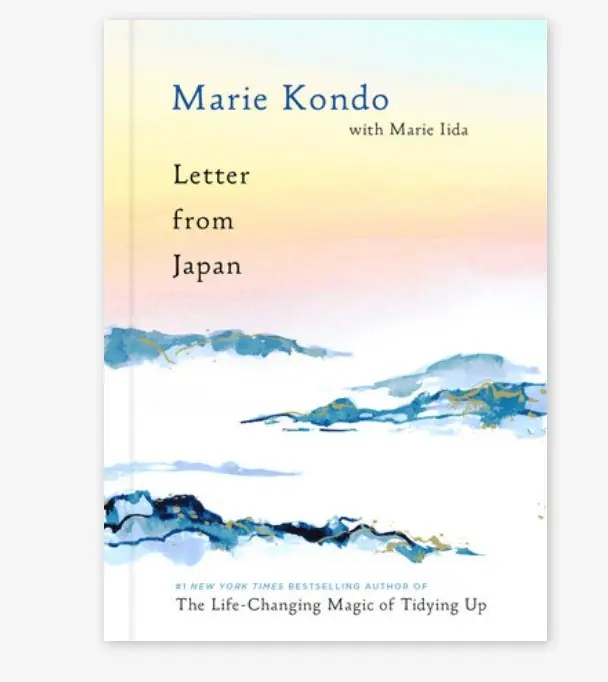
A few weeks ago, I saw Marie Kondo in London at the Royal Geographical Society, where she spoke about her latest book Letter from Japan. In case you’ve missed it, please read my review here. Today, I want to give you a quick overview and my initial thoughts on her latest book.
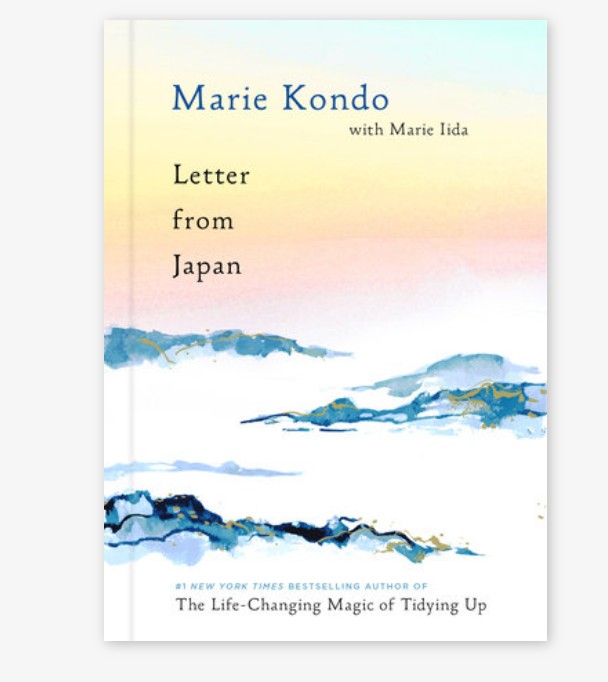
Letter from Japan is Marie Kondo’s latest book, published on 21 October 2025 by Penguin Random House. In this work, she deviates somewhat from the more strictly pragmatic “declutter your home” format of earlier books, offering instead a more personal and cultural reflection on Japan’s values and traditions. In the book, she explains how these underpin her approach to tidying, home, and life.
Marie Kondo structures the book around six guiding Japanese principles (Cherish, Perfect, Consider, Harmonise, Purify, Savour), which she uses as lenses to discuss everyday rituals, aesthetics, seasonal flow, and the inner meaning of space and objects.
What works
- Depth of perspective – For longtime readers of Kondo’s work, this book offers a fresh layer: rather than simply how to tidy, it explores why tidying and mindful living matter in her cultural context. The personal stories and references to Japanese customs enrich it.
- Beautifully framed – The book is described as “her most personal and affirming book yet” by the publisher. The edition itself (in hardback, with thoughtful design) fits nicely as a gift or a coffee-table style book as much as a practical manual.
- Broader relevance – Though grounded in Japanese tradition, the themes of respect, space, rhythm, and meaning can resonate for any reader seeking more than just “tidy your stuff”. For example, she touches on the importance of ma (negative or empty space) as essential to presence and tranquillity.
Things readers should note
- Less of a how-to manual – If you’re looking for a step-by-step guide to tidying every drawer and closet (à la her earlier book The Life‑Changing Magic of Tidying Up), this isn’t that. It is more reflective and philosophical. Some readers might prefer a more practical layout.
- Cultural resonance – Many of the insights depend on an understanding (or at least openness to) Japanese aesthetics, rituals and worldview. If you’re brand new to Kondo and just want “tidy tips”, the cultural depth might feel less immediately actionable.
- Application still required —the book encourages a mindset shift; the principle of “sparking joy” remains implicit rather than explicit. Readers will still need to translate the reflections into their own daily practices.
Key take-aways
- The idea of cherishing things not just for utility but for their story or presence: Kondo invites readers to see their belongings and their space not just as storage but as meaningful.
- Emphasis on space and emptiness: The principle of ma teaches us to value what is not there as much as what is — the silence, the pause, the empty shelf, the restful drawer.
- A shift from “just tidying” to living deeply: The book nudges you to consider how you live, how your home, objects, seasons, and rituals intertwine.
- A gentle reminder of gratitude and respect: for example, treating objects, meals, and environments with care, acknowledging their place in your life rather than simply disposing of or replacing them.
My verdict
Letter from Japan is a lovely evolution in Marie Kondo’s body of work. It’s less about the mechanics of decluttering and more about the soul of living with intention. For readers who already appreciate her earlier books, this will feel like a deepening, a companion. For newcomers, it might be more rewarding if paired with one of her more practical guides.
If I were to score it: 4.5/5. It doesn’t replace the “tidy checklist” style book, but it complements the journey beautifully.
Would I recommend it?
- Yes, if you:
- Have read Kondo’s earlier works and want a fresh perspective.
- Are interested in Japanese aesthetics, mindful living, or home as more than just storage.
- Appreciate books that blend philosophy, culture, and home life.
- Maybe hold off, if you:
- Need a direct, actionable guide for decluttering and organising now.
- Are not particularly interested in cultural context and just want immediate “do this, then this” instructions.
If you like, I can pull out 10 favourite quotes from the book or summarise each of the six principles more fully. Would you like that?
trabantbettina

Bettina Anna Trabant, Founder of Life Organised, your professional organising and decluttering service in East London. Eco-conscious minimalist and avid tea drinker,