Introduction – The Ultimate Guide to Decluttering
“Your home is living space, not storage space.” — Francine Jay
Decluttering your home isn’t about getting rid of everything you own. It’s about creating a home that works for you.
If your home feels crowded, chaotic or difficult to manage, you might be wondering where to begin.
Perhaps you have cupboards you can barely open, clothes you never wear, paperwork that needs sorting, or belongings you’ve been meaning to deal with for years. Maybe you have simply accumulated more than you have the time, energy or space to manage.
Whatever the reason, decluttering can make a real difference.
But it doesn’t have to mean spending an entire weekend emptying every cupboard or filling your house with dozens of bin bags.
Decluttering works best when it makes your life easier — not harder.
This guide will take you through the process step by step, from deciding what to keep to dealing with the things you no longer need.
What is decluttering?
Decluttering is the process of deciding what you genuinely need, use, value or want in your life — and letting go of things that no longer serve a useful purpose.
It can involve:
- Clothes you no longer wear
- Books you’ve finished or will never read
- Kitchen equipment you rarely use
- Paperwork and documents
- Toys and children’s belongings
- Decorations and ornaments
- Old electronics
- Duplicate items
- Unused hobby equipment
- Digital files and photographs
- Items waiting to be repaired
- Things you are keeping “just in case”
Decluttering isn’t necessarily about minimalism.
You don’t have to own a certain number of possessions or aim for an empty, minimalist home.
The goal is to have the right amount of stuff for you, your circumstances and your home.
Dana K. White, author of Decluttering at the Speed of Life: Winning Your Never-Ending Battle with Stuff,defines decluttering as follows:
“Decluttering is stuff you don’t need leaving your house. And that’s really all it is. If five things leave or five hundred things leave, you’ve succeeded.”
Why do we accumulate so much stuff?
Before you start decluttering, it helps to understand why your possessions accumulated in the first place.
Most of us acquire things for perfectly understandable reasons.
We buy things because they’re useful, attractive, convenient, entertaining or comforting. We receive gifts. We inherit possessions. Our circumstances change. Children grow up. Hobbies come and go.
And sometimes we simply don’t have the time or energy to deal with things once we’re finished with them.
Modern life also makes acquiring things remarkably easy.
We can order almost anything with a few clicks, replace things quickly and cheaply, and be constantly exposed to advertising and new products.
Over time, small amounts of excess can become a significant amount of clutter.
The answer isn’t to blame yourself.
Instead, ask:
What can I change now to make things easier in the future?
Joshua Becker identifies seven reasons we buy more stuff than we need.
1. We think it will make us secure.
2. We think it will make us happy.
3. We are more susceptible to advertising than we believe.
4. We are hoping to impress other people.
5. We are jealous of people who own more.
6. We are trying to compensate for our deficiencies.
7. We are more selfish than we like to admit.
Clutter vs mess: what’s the difference?
These two things are often confused.
Mess is usually temporary.
Dirty dishes, laundry waiting to be folded, or paperwork waiting to be filed can all make a room look untidy, but you can deal with them relatively quickly.
Clutter is different.
Clutter often consists of possessions that don’t have a clear place, aren’t being used, or have accumulated beyond what your home can comfortably accommodate.
You can tidy a messy room without decluttering it.
But if a room repeatedly becomes messy because there is simply too much stuff, decluttering may be part of the solution.
The benefits of decluttering
“We don’t realize how excess stuff draws on our energy until it’s removed.” ― Mary Vraa, PopUpPurge(TM) Release Midlife Clutter & Reclaim Inner Clarity
Decluttering can offer practical and emotional benefits.
A less cluttered home can make it easier to:
Find things
When everything is competing for your attention, finding one particular item can become surprisingly difficult.
Clean your home
Fewer possessions generally mean fewer things to move, dust around or clean.
Maintain your home
When surfaces, cupboards and floors aren’t overloaded, everyday household tasks can become easier.
Save time
How much time do you spend looking for things, moving things around or deciding where something should go?
Make decisions
Having fewer unnecessary possessions can reduce the number of decisions you have to make about what to keep, store, maintain or deal with.
Make better use of your space
Decluttering can help you reclaim cupboards, drawers, shelves and rooms that have gradually become storage areas.
Reduce overwhelm
A cluttered environment can feel difficult to manage. Creating a little more physical space can sometimes create a little more mental space too.
Before you start: don’t try to declutter your whole home
This is one of the most important pieces of advice I can give you.
Don’t start by deciding to declutter your entire house.
That’s a huge project.
And if you’re already overwhelmed, thinking about everything you need to do can make it even harder to begin.
Instead, choose one small area.
It could be:
- One drawer
- One shelf
- One cupboard
- Your handbag
- Your bedside table
- A section of your wardrobe
- One kitchen cupboard
- A pile of paperwork
Starting small makes the task manageable— and finishing something creates momentum.
Step 1: Decide why you want to declutter
Before you start throwing things away, think about what you want to achieve.
Perhaps you want:
- A calmer bedroom
- A more functional kitchen
- Easier mornings
- Less cleaning
- More storage space
- To prepare for a house move
- To make your home easier to manage
- To stop losing things
- To create more space for the people who live there
- To reduce the amount of stuff you have to look after
Your reason matters because it gives you something to work towards.
Instead of thinking: “I need to get rid of stuff.”
Try thinking: “I want to make my home easier to live in.”
That’s a much more useful goal.
Step 2: Choose your starting point
You can approach decluttering in several ways. There isn’t one correct method.
Start with something easy. Choose an area where decisions are relatively straightforward.
For example:
- Expired toiletries
- Out-of-date food
- Empty boxes
- Broken items
- Clothes that don’t fit
- Duplicate kitchen utensils
This can be a good way to build confidence.
Start with something important. Alternatively, choose an area that frustrates you a lot.
If you can’t open your wardrobe without things falling out, tackling that space might immediately improve your daily life.
Start with a small area.
If you’re feeling overwhelmed, break the task into smaller pieces. Don’t declutter the kitchen. Declutter one kitchen drawer.
Don’t declutter the wardrobe. Declutter one shelf.
Small steps count.
Step 3: Set a timer
You don’t need hours. Try starting with 10 or 15 minutes.
Set a timer and work until it goes off. Then stop, take a break and decide whether you want to continue.
Short sessions can be particularly useful if you have limited time or energy.
The aim isn’t to exhaust yourself. The aim is to make progress that you can sustain.
Step 4: Gather your supplies
You don’t need expensive organising products.
You may only need:
- Bin bags
- Recycling bags or boxes
- A box or bag for donations
- A box for items that belong elsewhere
- A pen
- Labels, if useful
- Cleaning cloths
Don’t rush out and buy storage containers before you declutter. Storage doesn’t solve excess.
If you buy containers first, you may simply end up organising things you don’t actually need.
Step 5: Sort your belongings
One simple approach is to create several categories.
Keep
Things you use, need, love or genuinely want to keep.
Donate
Things that are useful but you no longer need.
Sell
Items that have enough value to make selling worthwhile.
Recycle
Items that can be recycled through the appropriate route.
Dispose
Things that are broken, unusable or cannot reasonably be reused or recycled.
Relocate
Things that belong somewhere else in your home.
You can also have a “not sure” category if necessary.
But be careful.
A “not sure” box can easily become a box where difficult decisions go to be avoided indefinitely.
Step 6: Ask yourself the right questions
One of the hardest parts of decluttering is deciding whether to keep something.
Try asking:
Do I use this?
If you use it regularly, that’s a strong reason to keep it.
Do I need this?
Consider whether it serves a genuine purpose in your current life.
Do I love this?
Some possessions don’t need to be practical.
If something brings you genuine joy, that matters.
Would I buy this again today?
Imagine that the item had disappeared.
Would you spend your money replacing it?
Does it fit my life now?
Not the life you had five years ago.
Not the life you imagine you might have one day.
Your life now.
Do I have something else that does the same job?
Duplicates are often an easy place to make progress.
Am I keeping this because I feel guilty?
Guilt is not necessarily a good reason to keep something.
Am I keeping this “just in case”?
Sometimes “just in case” is sensible.
Sometimes it is simply a way of postponing a decision.
Ask yourself how likely that future situation really is.
The “just in case” problem
“Just in case” is one of the most common reasons people keep things.
It can be useful to keep an umbrella, a first-aid kit or basic tools.
But we can also end up keeping:
- Clothes for a future size
- Equipment for hobbies we no longer do
- Old cables
- Furniture for a hypothetical future home
- Containers because they might be useful
- Gifts we don’t like
- Items that might someday be repaired
Instead of asking:
“Could I possibly need this?”
Ask:
“How likely am I to need this, and what would I do if I didn’t have it?”
Sometimes the answer is that replacing something later would be inexpensive and easy.
What about sentimental items?
Sentimental possessions can be some of the hardest things to declutter.
A photograph, letter, child’s drawing or piece of clothing can represent a person, place or period of your life.
You don’t have to get rid of everything sentimental.
Instead, consider whether you need to keep every physical object associated with a memory.
Ask:
- What does this item mean to me?
- Am I keeping the object or the memory?
- Do I have multiple items representing the same event?
- Would a photograph preserve the memory?
- Would keeping a smaller selection make the meaningful items more special?
You don’t have to be ruthless with sentimental possessions.
You can keep things simply because they matter to you.
Gifts: you don’t have to keep everything
“The manner of giving is worth more than the gift.” — Pierre Corneille
A gift was given to you.
Once it belongs to you, you get to decide what happens to it.
You can appreciate the thought behind a gift without keeping the physical object forever.
If you don’t use something, don’t like it or don’t have space for it, you don’t have to keep it indefinitely out of guilt.
The giver gave you a gift.
They didn’t give you a lifetime storage obligation.
Clothes: decluttering your wardrobe
Clothes can be particularly difficult because they are connected to identity, memories, body image and aspirations.
Start with the easiest decisions.
Look for:
- Clothes that don’t fit
- Damaged clothes you aren’t going to repair
- Uncomfortable clothes
- Items you never wear
- Duplicates
- Clothes that no longer suit your lifestyle
- Things you haven’t worn in years
But be careful about using arbitrary rules.
You don’t have to get rid of something simply because you haven’t worn it recently.
Instead, ask whether it has a realistic role in your life.
And remember:
You don’t have to keep clothes for a future version of yourself.
Your wardrobe should support the life you actually live.
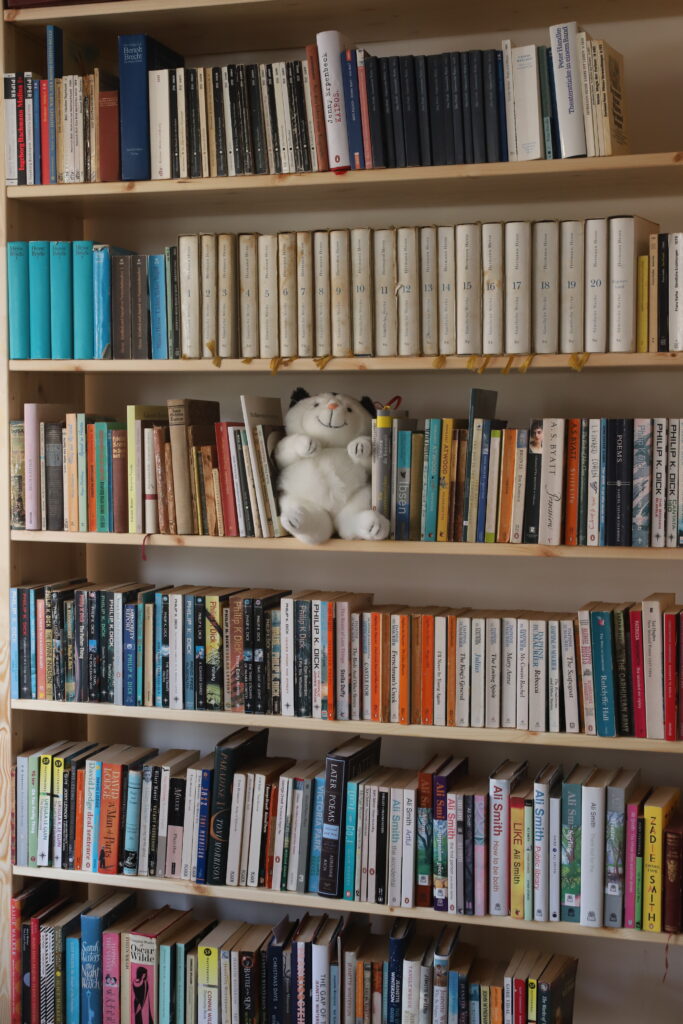
Books
Books can be especially difficult to let go of.
Reading is a great way to pass the time; it can do wonders for your intellect and mental health. Whenever you read a good book, somewhere in the world a door opens to allow in more light. —Vera Nazarian
But do you need to keep every book you ever bought?
You may have bought them with good intentions.
Perhaps you haven’t read them yet.
Perhaps you loved them years ago.
Perhaps you want to read them again someday.
Ask:
- Will I realistically read this?
- Would I read it again?
- Can I borrow it from a library if I want it later?
- Is there another reason I genuinely want to keep it?
There is no shame in owning books.
But you don’t need to keep every book you’ve ever owned to prove that you love reading.
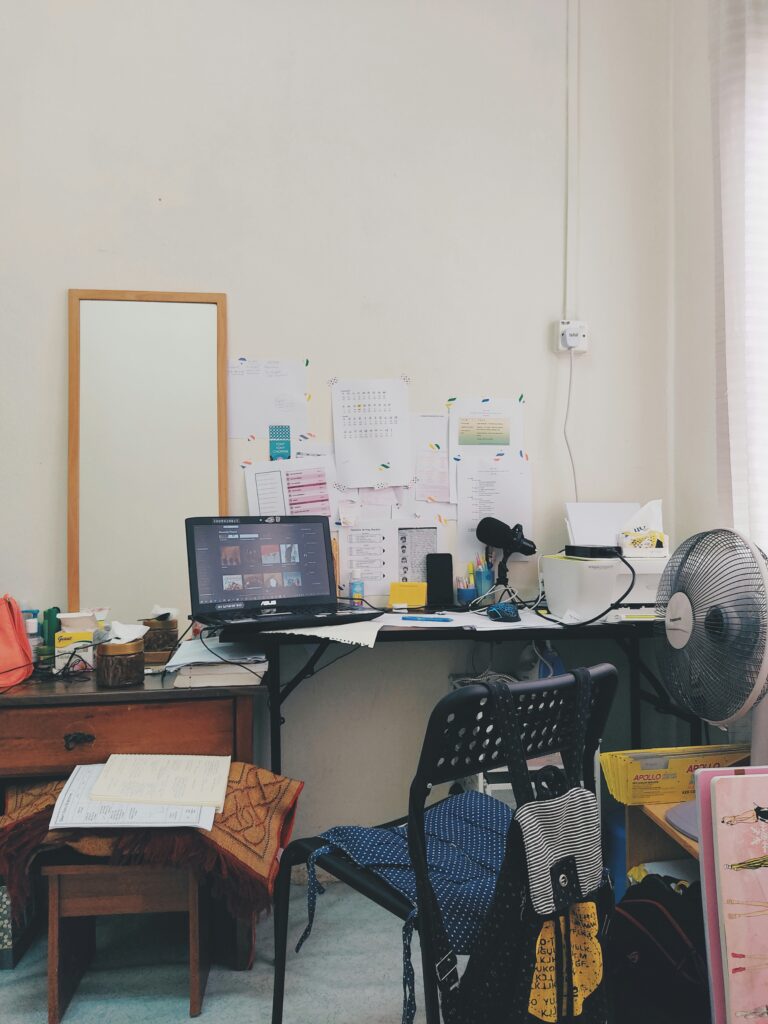
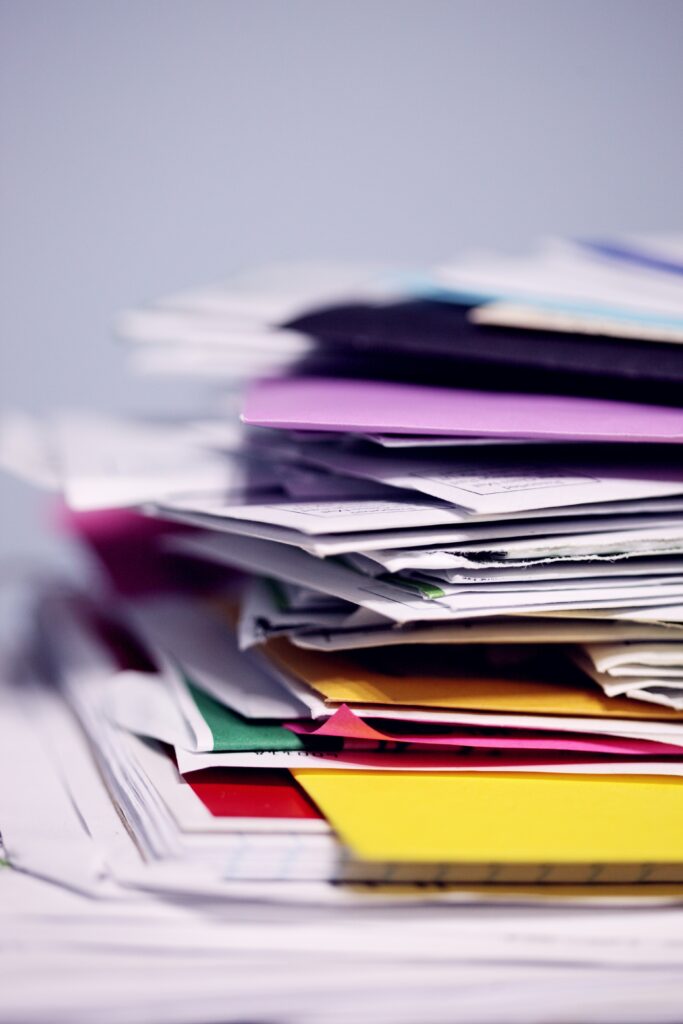
Paperwork
Paper is another major source of clutter.
Start by removing the obvious:
- Junk mail
- Envelopes you don’t need
- Duplicates
- Out-of-date information
- Old notes
- Receipts you no longer need
Be careful with important documents.
Keep records that you are legally or practically required to retain, and securely dispose of sensitive paperwork you no longer need.
For important financial, legal, medical or official documents, check the relevant current retention requirements before throwing them away.
A simple filing system is usually better than an elaborate one.
You don’t need twenty different categories. Keep it simple.
The best filing system is one you will actually use.
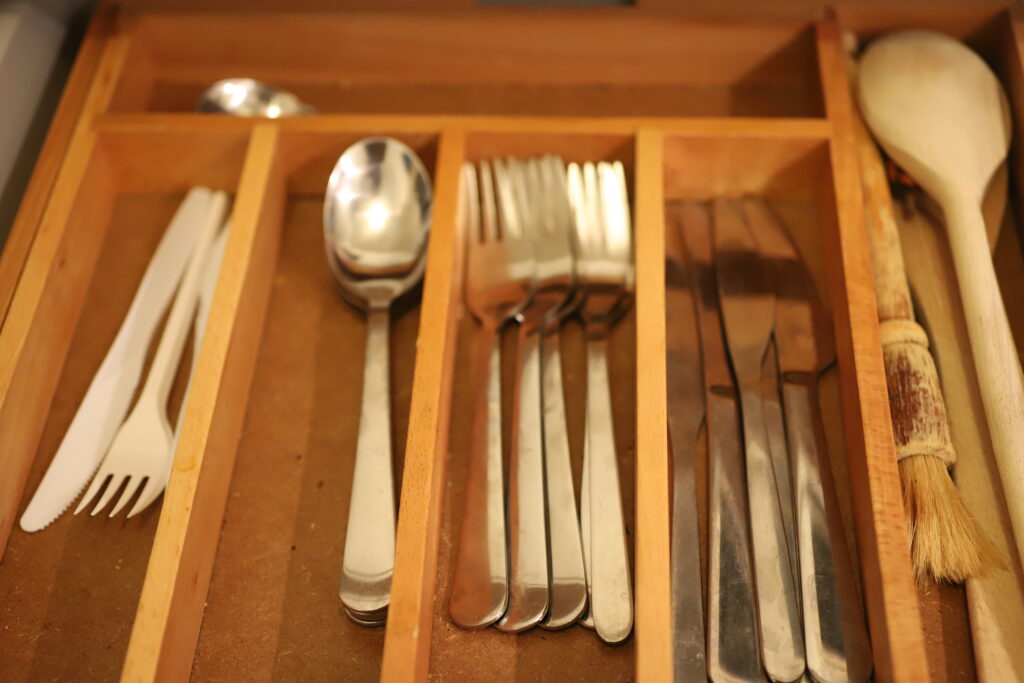
The kitchen
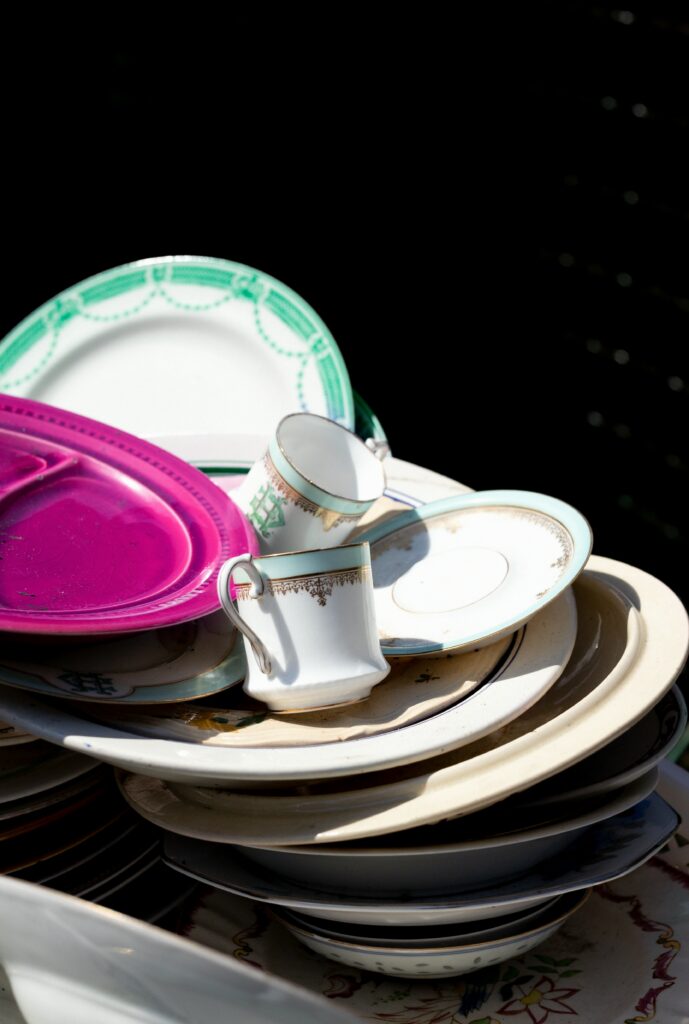
Kitchens often accumulate duplicates and gadgets.
Look for:
- Duplicate utensils
- Mugs you never use
- Food containers without lids
- Lids without containers
- Expired food
- Appliances you rarely use
- Promotional items
- Damaged cookware
- Items you don’t have space to store properly
Think about how you actually use your kitchen.
Your kitchen should make cooking and eating easier — not require constant rearranging just to find what you need.
Bathrooms and toiletries
Bathrooms are often surprisingly easy to declutter.
Check for:
- Expired products
- Empty containers
- Products you dislike using
- Duplicate products
- Old cosmetics
- Samples you are unlikely to use
- Products that no longer suit your needs
Dispose of products responsibly, particularly medications and anything requiring special disposal.
Try not to replace products simply because you have used them up.
Ask yourself whether you actually need another one.
Children’s belongings
Children grow quickly, which means their possessions can accumulate quickly too.
Regularly review:
- Clothes they’ve outgrown
- Broken toys
- Toys they no longer play with
- Schoolwork
- Duplicates
- Books they’ve outgrown
- Equipment connected to activities they’ve stopped doing
Give children age-appropriate involvement in decisions about their belongings.
You may need to keep some things for practical reasons, but you don’t necessarily need to preserve every object from every stage of childhood.
Sentimental clutter and memories
Sometimes the hardest clutter isn’t physical.
It’s emotional.
You might keep something because:
- Someone you loved gave it to you
- It belonged to a relative
- It reminds you of a particular period
- You spent a lot of money on it
- You feel guilty getting rid of it
- It represents something you hoped your life would become
These decisions can take longer.
Give yourself permission to go slowly.
You don’t have to make every difficult decision in one afternoon.
What if something is valuable?
Value can mean different things.
Something can have:
- Financial value
- Practical value
- Sentimental value
- Historical value
- Emotional value
Don’t assume that something is valuable simply because it is old or belonged to someone else.
If you believe an item may have significant financial or historical value, consider getting appropriate professional advice before disposing of it.
For ordinary possessions, however, remember that the money you paid for something in the past is already spent.
The question is whether keeping it benefits you now.
Should you sell everything?
Probably not.
Selling can help with genuinely valuable items, but selling every unwanted possession can turn decluttering into another full-time job.
Before listing something for sale, consider:
- How much could I realistically get?
- How much time will selling take?
- Will I need to photograph and describe it?
- Will I have to package and post it?
- Is it worth dealing with messages and negotiations?
- How quickly do I want the item out of my home?
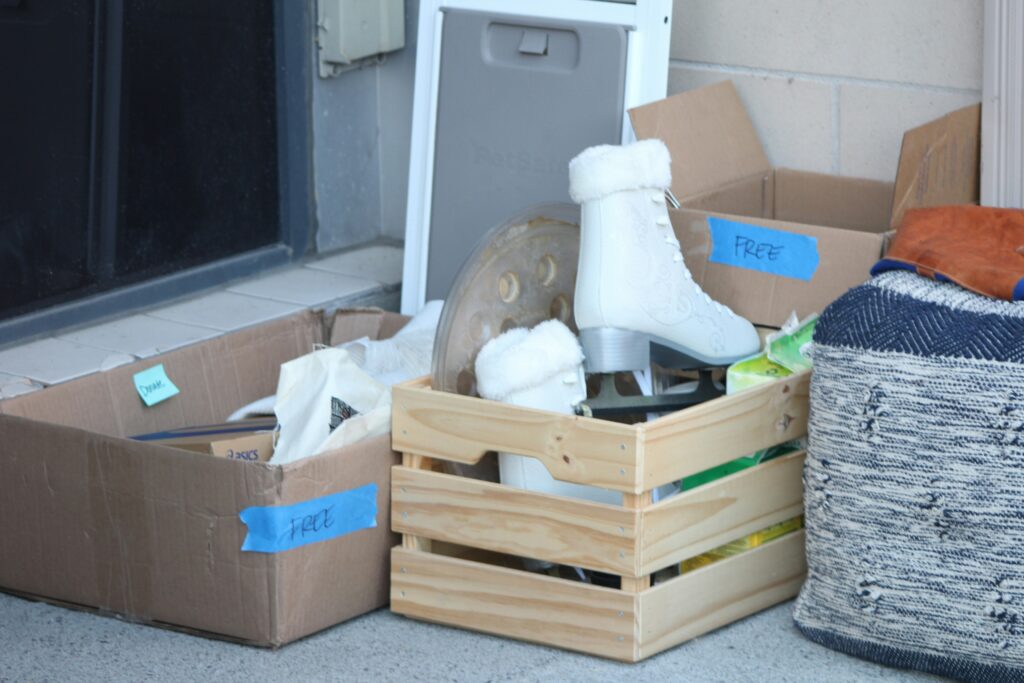
Sometimes donating an item is a better choice.
The goal isn’t to maximise the money you recover. It’s to make your life easier.
Where should unwanted things go?
Decluttering doesn’t end when something leaves your home.
Think about the most appropriate exit route.
Donate
Useful, good-quality items can potentially benefit someone else.
Sell
Consider this for items that have meaningful resale value.
Repair
If something is worth keeping and genuinely repairable, make a realistic plan to repair it.
Reuse
Could you or someone else use the item for another purpose?
Recycle
Use appropriate recycling facilities and schemes where available.
Dispose
Some things genuinely need to be thrown away.
Don’t allow guilt about waste to keep unusable items indefinitely.
Responsible decluttering is about finding the best realistic route out — not achieving zero waste at all costs.
The danger of the “maybe” pile
A temporary “maybe” box can be helpful.
But give it a purpose.
For example, label it with a review date.
If you haven’t needed or thought about the contents by that date, revisit the decisions.
Otherwise, your maybe pile simply becomes another storage area.
Decluttering when you have limited time or energy
You don’t need to follow a traditional “decluttering day”.
If your time or energy is limited, work with what you have.
Try:
Five minutes:
One drawer.
Ten minutes:
One shelf.
Fifteen minutes:
A small section of your wardrobe.
While waiting for the kettle:
Clear one kitchen surface.
While watching television:
Sort a small box of paperwork.
You can also declutter while doing other things.
For example, when putting away laundry, remove clothes you know you no longer wear.
When emptying the dishwasher, identify kitchen items you never use.
When opening the post, deal with unwanted paperwork immediately.
Small actions accumulate.
Decluttering when you’re overwhelmed
If your home already feels overwhelming, a massive decluttering project can feel impossible.
Start by reducing the visual noise.
Choose one visible area.
Clear a small surface.
Remove rubbish.
Return things to where they belong.
Then stop.
You don’t have to solve everything today.
Try to focus on:
What would make the biggest difference to my everyday life?
That is often more useful than asking:
What can I get rid of?
What if someone else doesn’t want to declutter?
If you share your home with other people, remember that their possessions belong to them.
You can make decisions about your own belongings.
You can agree shared systems for shared spaces.
But you shouldn’t simply dispose of someone else’s possessions because you think they are unnecessary.
Talk about the problem together.
Focus on how the space needs to function rather than criticising the other person’s belongings.
Decluttering isn’t a competition
You don’t need to:
- Own fewer things than your friends
- Have a minimalist home
- Fit your possessions into a certain number of boxes
- Follow somebody else’s decluttering rules
- Finish your entire house in a weekend
- Take photographs of dramatic before-and-after transformations
Your home doesn’t need to look like somebody else’s home.
It needs to work for you.
What not to do
There are a few common mistakes that can make decluttering harder.
Don’t empty everything at once
Unless you have a clear plan and enough time and energy, this can create an even bigger mess.
Don’t buy lots of storage first
Declutter before organising.
Don’t aim for perfection
A perfectly organised home isn’t the objective.
Don’t make decisions when you’re exhausted
Difficult decisions require energy.
Don’t keep things purely because you paid a lot for them
The money has already been spent.
Don’t keep everything for a hypothetical future
Your future needs may be different from your current ones.
Don’t compare your home with social media
You are seeing a curated image, not somebody’s entire life.
Once you’ve decluttered: give everything a home
Decluttering and organising are related, but they aren’t the same thing.
Once you’ve reduced the amount of stuff you own, think about where the remaining possessions should live.
A good home for an item should ideally be:
- Easy to access
- Easy to put away
- Appropriate for how often you use it
- Logical
- Easy to maintain
The easier it is to put something away, the more likely you are to do it.
Make your systems easy
This is where organisation can make a real difference.
Don’t create complicated systems that require lots of effort to maintain.
If you use something every day, it should be easy to access.
If you use something occasionally, it can be stored further away.
If you have to perform five steps to put something away, you’re probably going to leave it out.
Good organisation reduces effort.
Preventing clutter from coming back
Decluttering isn’t a one-off event.
Life continues.
You buy things. People give you things. Circumstances change.
The aim is not to create a home that never gets cluttered again.
Instead, develop simple habits that stop things getting out of control.
Try the one-in, one-out principle
When you buy something new, consider whether something similar can leave.
This can be particularly useful for:
- Clothes
- Shoes
- Books
- Kitchen equipment
- Children’s toys
Deal with things promptly
Don’t let paperwork pile up for months.
Don’t leave unwanted purchases sitting in a cupboard.
Don’t create a “I’ll deal with it later” pile that becomes permanent.
Have a regular reset
A few minutes each week can prevent small amounts of clutter becoming a large project.
Think before you buy
The most sustainable clutter is the clutter you never bring home.
Before buying something, ask:
Do I need it?
Do I already own something that does the same job?
Where will I keep it?
Will I still want it in six months?
Would I buy it if it wasn’t on sale?
Is this solving a genuine problem — or creating another possession to manage?
You don’t have to stop buying things.
The aim is to make more intentional choices.
Decluttering your digital life
Decluttering doesn’t have to stop at the front door.
Our digital possessions can become overwhelming too.
Consider tackling:
- Email inboxes
- Downloads folders
- Desktop files
- Duplicate photographs
- Old screenshots
- Unused apps
- Browser bookmarks
- Cloud storage
- Digital documents
- Old contacts
Digital clutter may not take up physical space, but it can still create friction.
A simpler digital environment can make it easier to find what you need.
A simple decluttering plan
If you’re not sure where to begin, try this.
Day 1
Choose one small area.
Day 2
Remove obvious rubbish.
Day 3
Remove duplicates.
Day 4
Deal with things that don’t belong there.
Day 5
Choose a few things to donate, sell or recycle.
Day 6
Give the remaining items sensible homes.
Day 7
Take a break and notice the difference.
Then choose another small area.
You don’t have to follow this schedule exactly.
The important thing is to keep the steps manageable.
A quick decluttering checklist
When you’re ready to start, remember:
☐ Decide why you want to declutter
☐ Choose one small area
☐ Set a manageable time limit
☐ Gather basic supplies
☐ Sort your belongings
☐ Remove obvious rubbish
☐ Look for duplicates
☐ Question “just in case” items
☐ Deal with things that need repairing
☐ Separate sentimental items
☐ Choose appropriate exit routes
☐ Give remaining belongings a home
☐ Avoid buying unnecessary storage
☐ Create simple maintenance habits
☐ Think before bringing new things into your home
The most important decluttering rule
There are hundreds of decluttering methods, challenges and rules available.
You don’t have to follow any of them.
The most important rule is simply this:
Your home should support your life, not make your life harder.
You don’t need to become a minimalist.
You don’t need to own only 100 things.
You don’t need to get rid of everything that doesn’t “spark joy”.
And you don’t need to finish your entire home in one weekend.
Instead, look at your possessions honestly and ask:
Is this helping me live the life I want to live?
If it is, keep it.
If it isn’t, consider whether it’s time to let it go.
Decluttering is about more than stuff
Ultimately, decluttering isn’t really about having fewer possessions.
It’s about having less to manage.
Every possession requires some combination of space, cleaning, maintenance, storage, attention and decisions.
The more unnecessary things we own, the more time and energy they can demand from us.
By gradually reducing what no longer serves us, we can create space — not just in our homes, but in our lives.
And that’s what decluttering should be about.
Not perfection.
Not an Instagram-worthy home.
Not getting rid of as much as possible.
Simply creating a home that is easier to live in.
Start small. Make one decision. Create a little more space.
Because Life Organised means creating more time for what matters most.
trabantbettina

Bettina Anna Trabant, Founder of Life Organised, your professional organising and decluttering service in East London. Eco-conscious minimalist and avid tea drinker,