I have written about minimalist clothing and a personal uniform on several occasions. Today, I would like to introduce you to several well-known individuals from industry, politics, and culture who have adopted a personal uniform.
Fran Lebowitz: The Witty Chronicler of Urban Life
Frances Ann Lebowitz, born on October 27, 1950, in Morristown, New Jersey, is an American author, public speaker, cultural critic, and occasional actor. Best known for her sharp wit and distinctive voice, Lebowitz has become a cultural icon, particularly associated with New York City’s literary and artistic life.
Lebowitz’s essays are celebrated for their satirical and observational humour, often delivered with a “curmudgeonly” edge. Her commentary highlights the absurdities of modern life, with a special focus on urban living and the cultural quirks of New York City. With her biting wit and razor-sharp phrasing, she has been compared to literary humourists like Dorothy Parker.
Lebowitz rose to prominence in the late 1970s and early 1980s with two essay collections:
- Metropolitan Life (1978)
- Social Studies (1981)
These were later compiled into The Fran Lebowitz Reader, a book that remains a popular introduction to her work.
Although she has long described herself as suffering from “writer’s blockade” (her wry term for chronic writer’s block), Lebowitz has remained an active cultural figure. Her sharp observations and public speaking engagements have kept her voice at the centre of discussions on art, culture, and society.
She has also appeared in acting roles, most memorably as Judge Janice Goldberg on Law & Order (2001–2007). In addition, she has been the subject of two acclaimed documentaries directed by Martin Scorsese: Public Speaking (2010) and Pretend It’s a City (2021), both of which showcase her as a modern-day philosopher of urban life.
Lebowitz is famous not only for her wit but also for her resistance to modern technology—she does not use a cell phone, computer, or even Wi-Fi. Instead, she cultivates an old-fashioned, deliberate presence in a hyperconnected world.
She often describes herself as a “grain of sand in an oyster,” positioning her blunt, wry criticism as a catalyst for reflection. Equally iconic is her personal style, characterised by blazers, jeans, boots, and her signature eyeglasses, which have become an integral part of her public persona.
Fran Lebowitz occupies a unique place in American letters—not prolific in output, but unforgettable in presence. Her essays, public appearances, and interviews continue to resonate with audiences who admire her mix of humour, insight, and unapologetic honesty. In an age of fleeting attention and digital noise, Lebowitz stands out as a timeless voice of scepticism and wit.
Lebowitz is known for wearing Levi’s 501 jeans, a white shirt with cufflinks, and a pair of cowboy boots.
Steve Jobs: The Visionary Who Changed Technology Forever
Steve Jobs was an American entrepreneur, inventor, and business executive best known as the co-founder of Apple Inc. Widely regarded as one of the most influential figures in the history of personal computing, consumer electronics, and digital media, Jobs left behind a legacy that continues to shape the way people live, work, and communicate.
Steven Paul Jobs was bornon February 24, 1955, in San Francisco, California and died on October 5, 2011, in Palo Alto, California (age 56) from pancreatic cancer.
Paul and Clara Jobs adopted Steve. He grew up in California and briefly attended Reed College before dropping out after six months. During his youth, he explored spirituality, travelled to India, experimented with LSD, and worked at Atari—experiences that helped shape his unconventional approach to life and business.
In 1976, Jobs co-founded Apple with Steve Wozniak and Ronald Wayne in a garage. Their first product, the Apple I, marked the beginning of a personal computing revolution. The Apple II, launched in 1977, became one of the first mass-market successes in the industry.
By 1984, Jobs introduced the Macintosh, the first mainstream computer with a graphical user interface and mouse—innovations that transformed the way people interacted with computers. However, after internal conflicts, Jobs was ousted from Apple in 1985.
After leaving Apple, Jobs founded NeXT Inc., a company that developed advanced workstations for educational and business use. Around the same time, he acquired a minor graphics division from Lucasfilm, which later evolved into Pixar Animation Studios. Pixar went on to create groundbreaking films, including Toy Story, Finding Nemo, and The Incredibles, which redefined animation and storytelling. In 2006, Jobs sold Pixar to Disney, becoming its largest individual shareholder.
Apple acquired NeXT in 1997, bringing Jobs back to the company he co-founded. From there, he led a remarkable turnaround, introducing a series of iconic products:
- iMac (1998): Revitalised Apple with bold design and simplicity.
- iPod (2001): Revolutionised how people listened to and purchased music.
- iTunes Store (2003): Pioneered legal digital music distribution.
- iPhone (2007): Combined phone, iPod, and internet into one device, creating the modern smartphone.
- App Store (2008): Sparked the mobile app economy.
- iPad (2010): Introduced a new category of personal computing.
- iCloud (2011): Pushed cloud storage and syncing into the mainstream.
These innovations not only saved Apple from decline but also reshaped industries ranging from music to telecommunications to publishing.
Steve Jobs is remembered not only as a pioneer of modern technology but also as a perfectionist and visionary. While his leadership style was often described as demanding, his relentless pursuit of excellence transformed the way people experience technology. From personal computers to smartphones, from animated films to digital media, Jobs’ influence remains deeply embedded in the modern world.
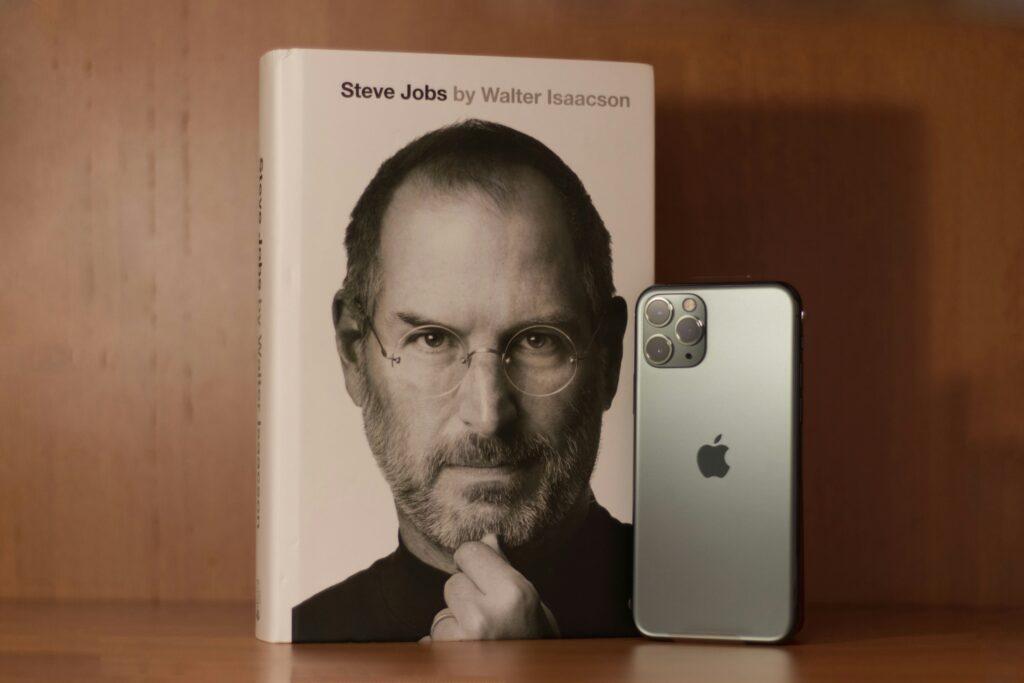
The late Apple co-founder famously wore a black Issey Miyake turtleneck, Levi’s 501 jeans, and New Balance 991 sneakers. He got the idea while visiting the Sony factory in Japan, where everyone wore a company uniform. While trying to introduce this to Apple, he got booed off stage.
Mark Zuckerberg: From Harvard Dorm Room to Meta CEO
Mark Elliot Zuckerberg was born on May 14, 1984, in White Plains, New York, to Edward Zuckerberg, a dentist, and Karen Zuckerberg, a psychiatrist. From an early age, he displayed an exceptional interest in computers and programming. In the 1990s, while still a child, he created simple games and messaging tools, showcasing the technical curiosity that would later define his career.
By the year 2000, Zuckerberg enrolled at the prestigious Phillips Exeter Academy, where he built Synapse, a music player that used artificial intelligence to predict songs users might enjoy. Both Microsoft and AOL attempted to acquire Synapse, but Zuckerberg declined their offers, choosing to pursue his own path.
In 2002, Zuckerberg entered Harvard University, studying computer science and psychology. The following year, he created Facemash, a website that allowed students to compare their classmates’ photos. Although popular, it was quickly shut down by Harvard for violating privacy.
On February 4, 2004, Zuckerberg and his roommates — Eduardo Saverin, Dustin Moskovitz, Andrew McCollum, and Chris Hughes — launched “Thefacebook”, a social networking platform initially exclusive to Harvard students. Just months later, in June 2004, Zuckerberg dropped out of Harvard and relocated to Palo Alto, California, to grow the platform.
Between 2005 and 2007, Facebook experienced rapid expansion. The platform dropped “The” from its name and opened access beyond universities. In 2005, Peter Thiel invested $500,000, giving the company its first significant funding boost. By 2006, Facebook became available to anyone aged thirteen and older, sparking explosive global growth.
Despite a $1 billion acquisition offer from Yahoo! in 2006, Zuckerberg refused to sell. His decision proved prescient: in 2007, Microsoft invested $240 million, valuing Facebook at $15 billion. That same year, Zuckerberg became the youngest-ever self-made billionaire at age 23. By 2009, Time magazine had named him Person of the Year.
The company’s meteoric rise was captured in the 2010 film “The Social Network,” which dramatised Facebook’s early years. Although Zuckerberg criticised its inaccuracies, he admitted parts reflected reality.
In May 2012, Facebook went public in one of the largest tech IPOs in history, raising $16 billion. A day later, Zuckerberg married Priscilla Chan, a paediatrician, in a private ceremony. That same year, Facebook made its first significant acquisition: Instagram, purchased for $1 billion.
Facebook continued to expand its influence through major acquisitions. In 2014, it acquired WhatsApp for $19 billion and Oculus VR for $2 billion, signalling ambitions beyond social networking.
In 2015, Zuckerberg and Chan launched the Chan Zuckerberg Initiative, pledging to give away 99% of their Facebook shares over their lifetimes to advance philanthropy.
But the company also faced criticism. In 2016, Facebook came under intense scrutiny for its role in the spread of misinformation during the U.S. presidential election, sparking global debates over the responsibilities of social media platforms.
In October 2021, Zuckerberg announced a bold transformation: Facebook, Inc. was rebranded as Meta Platforms, Inc. The shift signalled the company’s long-term focus on building the metaverse — a virtual and augmented reality-driven internet.
Between 2022 and 2023, Meta invested heavily in AI and VR development. However, it faced significant challenges, including declining ad revenue, mass layoffs, and growing competition from TikTok. In July 2023, Meta launched Threads, a direct competitor to Twitter (now X).
As of 2024–2025, Mark Zuckerberg remains the CEO of Meta, leading the company’s push into artificial intelligence, virtual and augmented reality, and next-generation social platforms. Despite market fluctuations, he remains one of the wealthiest individuals in the world, with an estimated net worth exceeding $100 billion.
The Facebook co-founder sports a minimalist wardrobe consisting of a grey T-shirt, hoodie, jeans, and sneakers, allowing him to focus his decision-making energy on work.
Karl Lagerfeld: A Life in Fashion and Reinvention
Karl Lagerfeld, born on September 10, 1933, in Hamburg, Germany, emerged from a wealthy family to become one of the most influential figures in the history of fashion. Known for his striking personal style—characterised by white hair, dark glasses, high-collared shirts, and gloves—Lagerfeld’s life was defined by reinvention, creativity, and an unwavering dedication to design.
From a young age, Lagerfeld showed a passion for drawing and design. In the 1950s, he relocated to Paris to pursue a career in fashion, laying the groundwork for what would become a legendary career.
At just twenty-one, Lagerfeld won second place in the 1954 International Wool Secretariat competition, narrowly missing first to Yves Saint Laurent. This early recognition opened doors, leading him to work as an assistant at Pierre Balmain in 1955 and then as art director for Jean Patou in 1958.
Lagerfeld’s influence grew in the 1960s. In 1963, he began working with Chloé, bringing a soft, romantic aesthetic to the brand. Two years later, he joined Fendi in Rome, where he would spend over 50 years modernising fur and leather, making the house a symbol of contemporary luxury.
The 1970s saw Lagerfeld become one of the most sought-after freelance designers. In 1983, he became the creative director of Chanel, revitalising the brand after Coco Chanel’s death. He reimagined iconic pieces—such as tweed suits, quilted handbags, and pearls—into modern, youthful designs. The following year, he launched his own label, Karl Lagerfeld, which showcased his signature edgy, black-and-white aesthetic and accessible luxury.
Beyond fashion, Lagerfeld explored photography, publishing, and art direction during the 1990s. In 1999, he opened 7L, a Parisian bookshop specialising in photography and design books. He also became known for his dramatic personal transformations, including losing over 40 kg in the 2000s, a journey he later chronicled in a book on dieting.
Lagerfeld continued to innovate, collaborating with H&M in 2004—a pioneering move that bridged the gap between luxury fashion and fast fashion. Throughout the 2010s, he simultaneously led Chanel, Fendi, and his own brand, an extraordinary achievement in the industry. His final Chanel haute couture show took place at the Grand Palais in Paris in 2018.
Karl Lagerfeld passed away on February 19, 2019, at the age of eighty-five, after a private battle with cancer. His legacy is immense:
- Transforming Chanel into one of the world’s most profitable luxury brands.
- Revolutionising Fendi’s fur and leather collections.
- Establishing the enduring Karl Lagerfeld brand.
- Inspiring cultural fascination with his personal style and witty, sometimes controversial remarks.
- Making his beloved cat, Choupette, a cultural icon in her own right.
Karl Lagerfeld is remembered not just as a designer, but as a symbol of fashion itself—constantly reinventing style while remaining rooted in elegance.
The late fashion designer had a well-known uniform of black and white clothing, a signature high collar, and a white ponytail.
Barack Obama: A Trailblazing Leader and Statesman
Barack Obama is an American politician, attorney, and author who served as the 44th President of the United States from 2009 to 2017. He holds a historic place in American history as the first African American President.
Born Barack Hussein Obama II on August 4, 1961, in Honolulu, Hawaii, Obama pursued higher education at Columbia University. He later attended Harvard Law School, where he made history as the first African American to serve as President of the Harvard Law Review.
Obama’s political journey began in the Illinois State Senate, where he served from 1997 to 2004. He then became a U.S. Senator from Illinois (2005–2008) before being elected President in 2008, winning re-election in 2012.
During his presidency, Obama oversaw several landmark initiatives and policies:
- The Affordable Care Act (also known as Obamacare) which expanded healthcare coverage to millions of Americans.
- Authorised the operation that killed Osama bin Laden in 2011.
- Guided the nation through economic recovery following the 2008 financial crisis.
- Advocated for climate change policies and renewable energy initiatives.
Since leaving office, Obama has remained active in public life through the Obama Foundation, authored books, delivered speeches, and engaged in numerous civic initiatives.
Barack Obama’s legacy as a leader, reformer, and influential figure continues to shape American politics and inspire people worldwide.
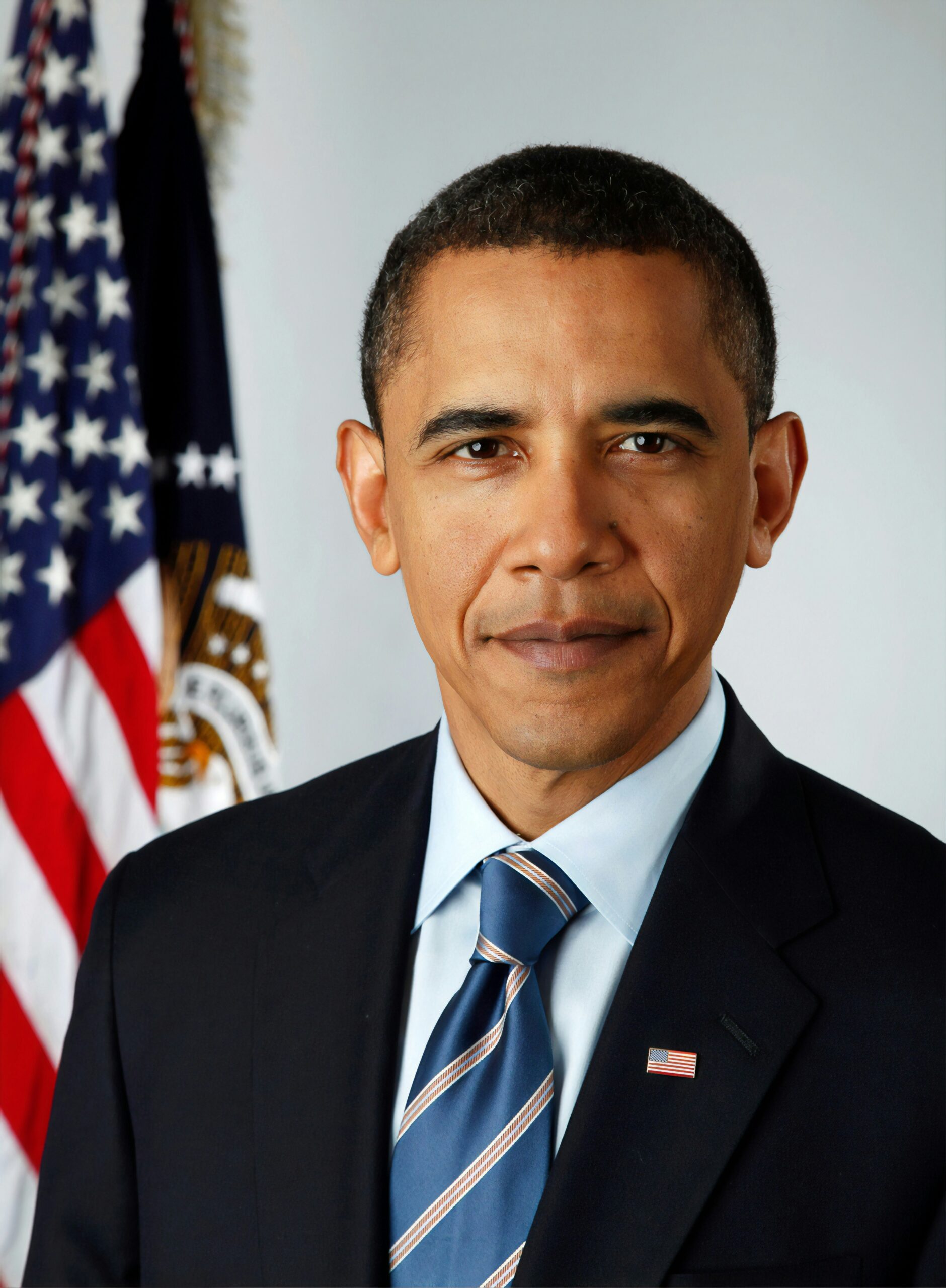
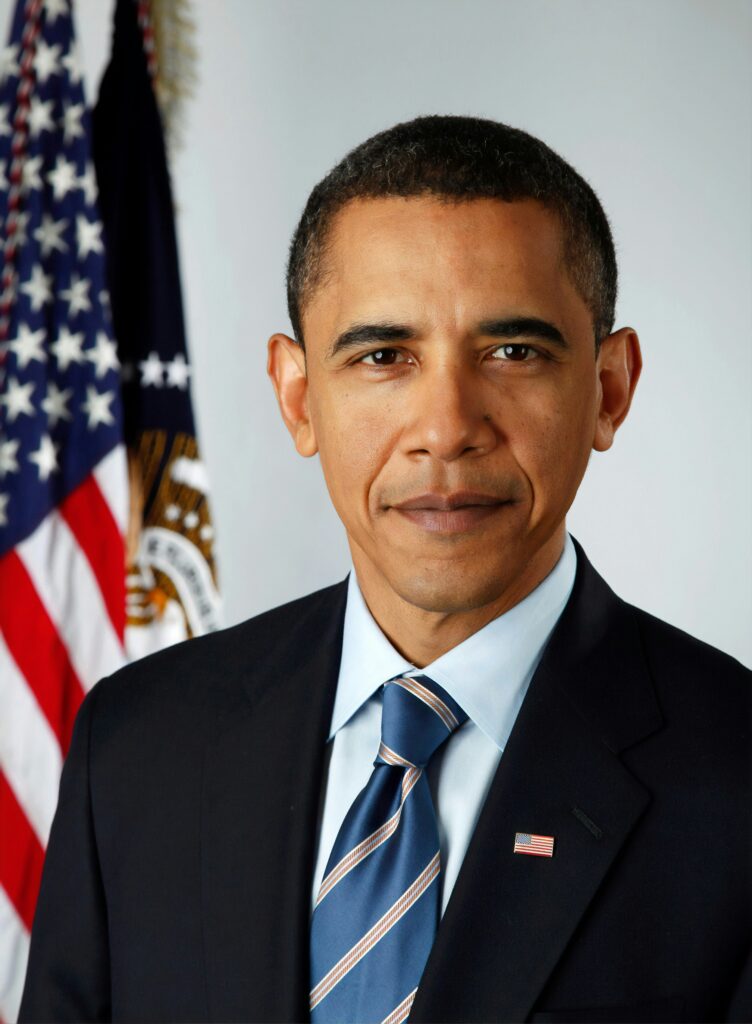
As President, Obama explained that he wore only grey or blue suits to limit his daily choices, allowing him to focus on more important decisions.
trabantbettina

Bettina Anna Trabant, Founder of Life Organised, your professional organising and decluttering service in East London. Eco-conscious minimalist and avid tea drinker,