On my blog, I have covered the topic of reducing consumption, No-Buy Challenges and explained what I no longer buy and why. However, even an eco-conscious minimalist needs to have her basic needs met. So, this week, I thought I’d cover six of my favourite places to shop. I will give you a basic introduction to the company and explain why I shop there.
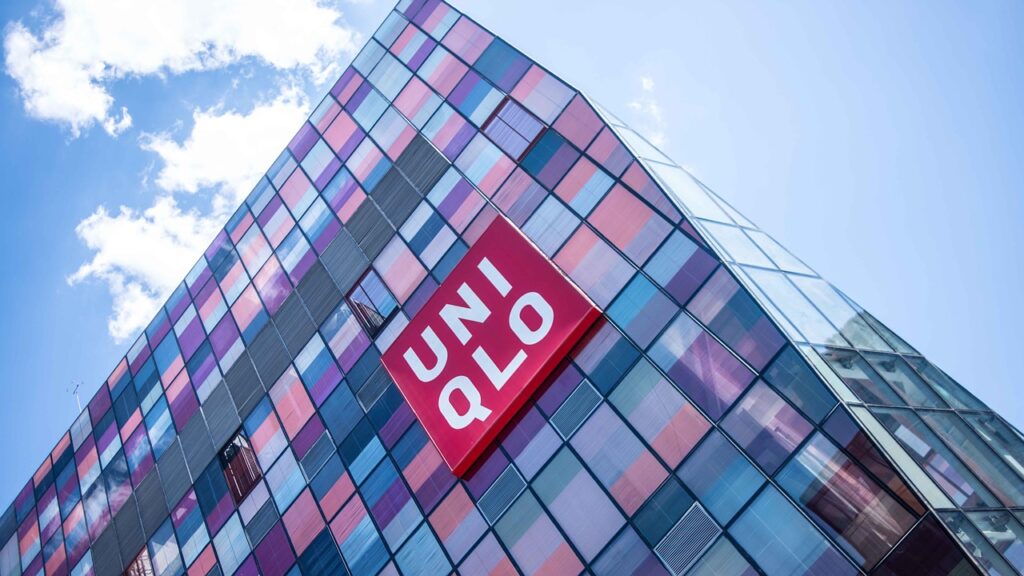
Uniqlo Co., Ltd. is a Japanese casual wear designer and retailer, known for its simple yet functional clothing. The brand is part of Fast Retailing, a company that adopted the “SPA” (Speciality Store Retailer of Private-Label Apparel) business model from American retailer The Gap in 1997, meaning they produce and sell their own clothing exclusively. Uniqlo outsources its manufacturing to factories in China, where labour is relatively inexpensive. (More on that below.)
The company’s origins date back to 1949, when Men’s Shop OS was rebranded as Ogori Shōji in Yamaguchi-shi, Japan. On 2 June 1984, Ogori Shōji opened a unisex casual wear store in Fukuro-machi, Naka-ku, Hiroshima, under the name Unique Clothing Warehouse—a name that would eventually evolve into Uniqlo. By April 1994, the brand had expanded to over one hundred stores across Japan. Its first urban store opened in Harajuku, Tokyo, in November 1998, marking the beginning of its spread into major Japanese cities.
As of 30 November 2024, Uniqlo operates 2,541 stores worldwide, employing over 30,000 people.
Uniqlo entered the UK market in September 2001, launching its first store in London. After undergoing a period of adjustment, the brand began steadily expanding its UK presence in recent years, opening several new stores and flagship locations. As of November 2024, there are 20 Uniqlo stores in the UK.
Followers of my blog and clients will know that I passionately care about where and how the items I purchase are produced. I am concerned about not trashing planet Earth or ruining someone’s life due to unsavoury working conditions. To determine whether my purchases meet the standards or, at the very least, to identify areas where a company could improve, I use a website called Good on You.
In their own words, Good on You is a website created:
…to use the power of people’s choices to drive a sustainable future. We aim to make sustainable shopping easy for millions of people around the world by being the best, most trusted source for brand ratings, articles and expertise on more sustainable fashion and beauty.
Good On You contributes to UN Sustainable Development Goal 12: “Ensure sustainable production and consumption patterns”. Our recognised and trusted brand rating system supports this global mission, leading the way towards a more sustainable and fair retail industry.
The website was founded in Australia in 2015 by a group of campaigners, business professionals, and sustainability experts to harness the power of consumer choices and create a more sustainable future. On their website, they feature many well-known brands and assess them based on their environmental impact and labour standards. They want to make it easy for consumers to make informed choices.
…There are thousands of products on the market, hundreds of sustainability issues, and there simply isn’t time for most consumers to do in-depth research on their purchases.
For more information on how Good on You operates, check their website.
Now you might ask yourself two questions. Firstly, why do I shop at Uniqlo when it’s clearly a Fast Fashion brand, and secondly, why does Good On You have anything positive to say when the problems with Fast Fashion are well-documented?
Let’s start by examining Uniqlo’s rating. Based on research by the expert ratings team at Good On You, Uniqlo has been given an overall rating of “It’s a Start” as of March 2023.
Uniqlo has made some progress, including implementing recycling programs, repair initiatives, and using lower-impact materials, as well as reducing water use. However, these steps are limited and do not significantly reduce their overall environmental footprint.
Uniqlo’s labour rating has improved slightly, with increased transparency and FLA-accredited audits. Yet, the brand fails to ensure living wages and is involved in a $5.5 million severance dispute with Indonesian workers. Without full accountability, its ethical claims fall short.
Uniqlo has banned the use of some animal-derived materials and adheres to the Five Freedoms in its policy. It uses recycled down and avoids mulesed wool. Still, the brand continues to use leather, silk, and exotic animal hair, offering limited evidence of responsible sourcing.
Uniqlo remains tied to the fast fashion model, encouraging overconsumption and short product lifespans. This drives pollution, waste, and high carbon emissions. Despite some improvements, its sustainability efforts lack the scale needed for real impact.
So why does Uniqlo, despite all its problems, get a ‘It’s a Start’? The Good On You rating system evaluates brands based on their public efforts to protect people, the planet, and animals. Many major fashion brands have responded to consumer demand by adopting eco-friendly materials, offering recycling programs, and launching sustainable or vegan lines. Others have joined global alliances and set targets to reduce the impact of their supply chains, which in turn influence their ratings for fairness and transparency.
I have been a customer at Uniqlo for over 20 years since it arrived in the UK. But why do I still shop there? My reasons are two-fold. Uniqlo does timeless plain staples in neutral colours that won’t go out of fashion quickly. Their clothing is also affordable and lasts a very long time for the price. Life Organised still doesn’t make six figures! I’ve had some T-shirts and trousers for over 5 years.
However, I have started moving away from Uniqlo when I can and where I can afford it. I now buy all my t-shirts, sleepwear and underwear at Organic Basics. More on them later. For me, it’s not about being perfect; it’s about being a mindful shopper and being aware of where your purchases come from and how they are produced, even if you can’t always shop 100% organically or fairly traded.
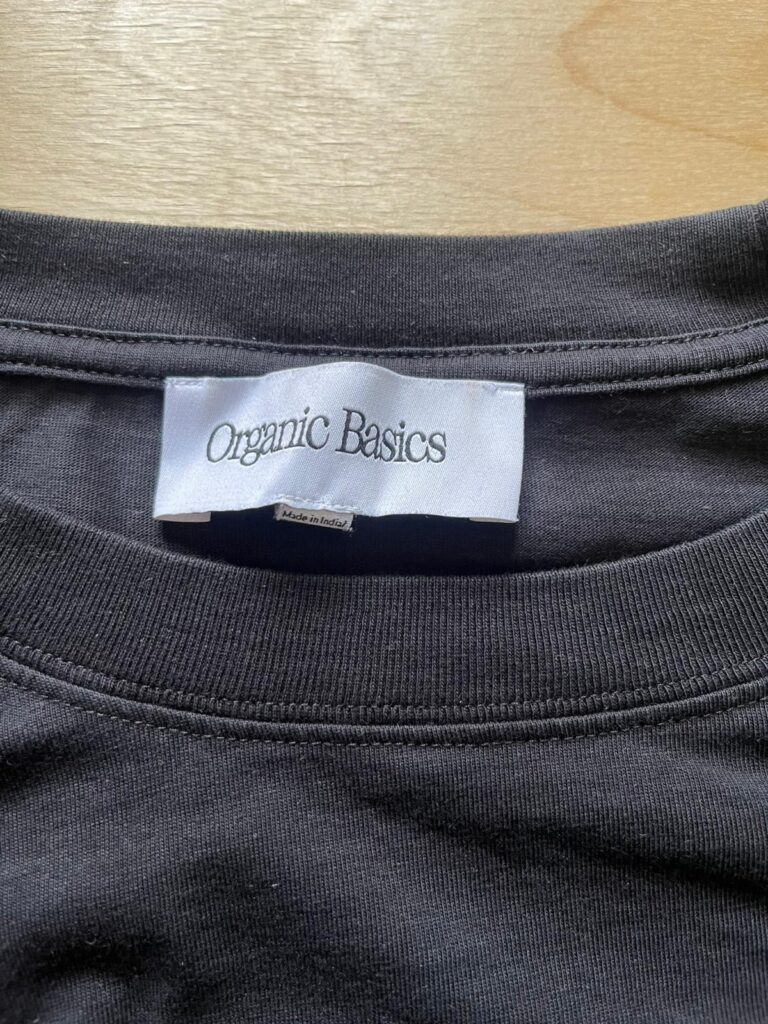
Another brand I shop at is Organic Basics. Organic Basics is a Copenhagen-based brand specialising in underwear, activewear, and everyday essentials. All products are designed in Denmark and ethically manufactured in Europe. The brand is committed to comfort, Sustainability, and responsible production, creating garments that are gentle on both people and the planet.
Organic Basics has received an overall sustainability rating of “Good”, based on a scale from 1 (“To Avoid”) to 5 (“Great”). These ratings evaluate the brand’s impact on the planet, people, and animals.
Organic Basics scores four out of five for its environmental efforts. It uses a high proportion of lower-impact materials, including organic cotton, and minimises the use of chemicals and water through thoughtful material selection. However, there is no evidence of a biodiversity protection policy or a Science-Based Target to reduce greenhouse gas emissions.
The brand earns a “It’s a Start” rating for its labour practices. While it audits suppliers, it sources from countries with a high risk of labour abuse and does not demonstrate policies ensuring living wages or financial security for workers. During the COVID-19 pandemic, it failed to disclose adequate worker protection measures.
Organic Basics performs well in animal welfare. It avoids using materials like leather, down, fur, angora, and exotic animal skins. Instead, it uses recycled exotic animal hair and recycled wool in all wool products.
While Organic Basics, as the name implies, specialises in basic, timeless fashion that cannot be bought second-hand, such as underwear, it has responded to customer feedback. It continues to evolve its collection to include some more colourful and playful pieces.
Inclusivity is a core principle for Organic Basics. While the brand acknowledges that it hasn’t always been able to offer a full range of sizes, it is expanding its offerings as it continues to grow. It also features diverse models and continually improves fit and accessibility.
As a proud member of 1% for the Planet, Organic Basics donates one per cent of every order to environmental causes. Through a partnership with Beam Impact, customers can also direct an additional one per cent of their purchase to a charity of their choice, making every purchase a contribution to meaningful change.
Organic Basics is a certified sustainable brand, ensuring transparency and accountability in its business practices. These certifications cover governance, environmental responsibility, community impact, and employee welfare, placing Organic Basics within a global community of responsible companies.
Timeless basics, good environmental and labour practices, models in all sizes and a willingness of the company to improve their practices, what is there not to like?
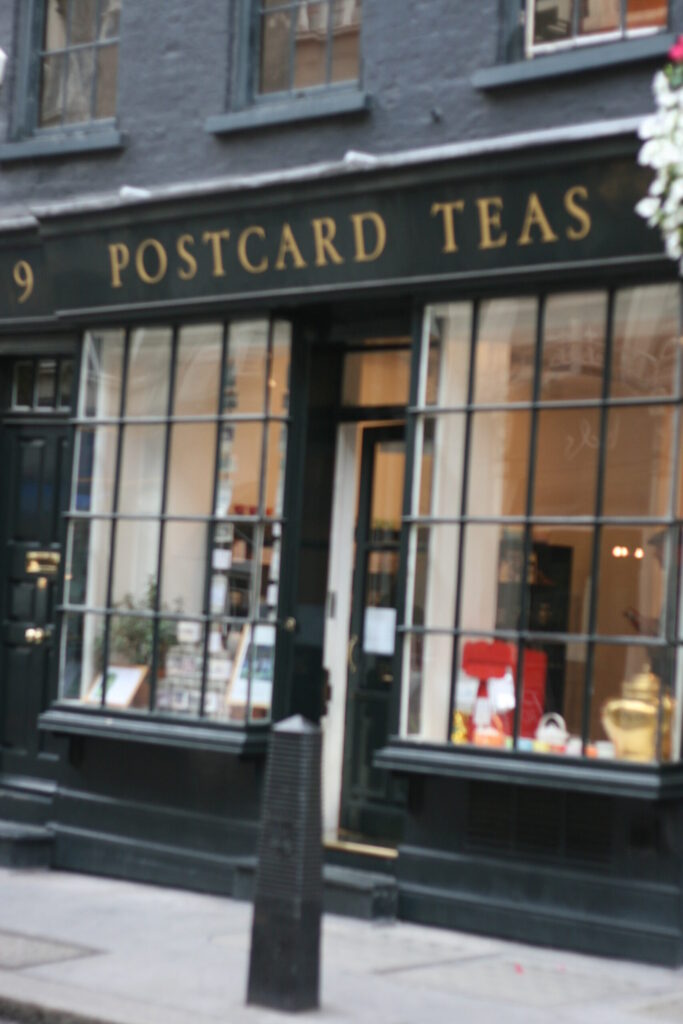
Timothy d’Offay, owner of Postcard Teas, became fascinated by tea culture and the nearby tea-growing regions while living in Kyoto over 30 years ago. In the late 1990s, Tim began importing tea from the people and places he had visited. In 2000, he co-founded East Teas at Borough Market with tea expert Alex Fraser. Since then, he has travelled extensively across Asia—including India, Sri Lanka, Vietnam, and China. Tim has written three books on tea, including “The Life of Tea” (with Michael Freeman), which won a book award.
With 30 years of travelling to tea-growing regions around the world, these journeys inspired the name, Postcard Teas. This aligned them with a new wave of tea sourcing in the 1990s, when Western tea merchants began sourcing their teas directly from producers.
Since those early days, our mission has been to change tea for the better. We offer radically different ways to buy and brew tea, built on transparency and traceability. In 2008, our extensive travels enabled us to become the first tea company in the world to name the individual tea makers and locations behind each of our 70+ teas, including our blends. (Postcard Teas)
The company believes that the above level of provenance is essential, not only for transparency but also for genuine connoisseurship. To fully understand a tea, one must consider the people, place, process, period, and plant behind it.
In 2012, Postcard Teas made a significant change: they stopped retailing teas grown on large plantations. Instead, they committed exclusively to working with micro farms of fewer than fifteen acres. Today, the average size of their partner farms is just five acres—about the size of two football fields.
While we had previously collaborated with both small farms and a few well-run plantations, we came to believe that the colonial-style plantation system was no longer viable. We’ve found that small-scale farms are demonstrably better for the people involved, the local economy, and the planet. (Postcard Teas)
Although they began as a retail business, Postcard Teas has since supplied tea to some of the UK’s most iconic stores, including Selfridges, Liberty, Harrods, Fenwick, Claridge’s, and The Fat Duck, among others.
I am an avid tea drinker, so this one had to be shared. The shop is based in central London, near Oxford Street. The owner and staff are super friendly; their shop is beautiful, and their sourcing is commendable.
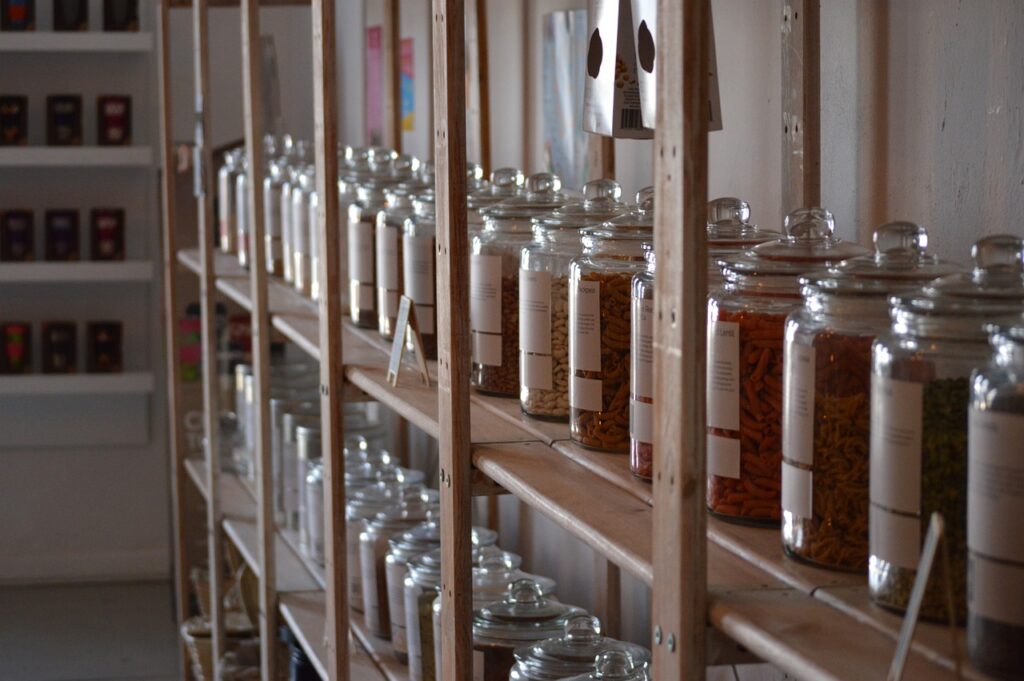
Refill Therapy ‘Changing the way we live and shop—one day at a time’ and they are only a short walk from my home in East London.
Refill Therapy is another staple of mine, and not only because it’s based a short walk from my home.
Refill Therapy in their own words:
…was inspired by the children in our lives—their boundless energy, curiosity, and passion for the environment. Their example sparked a journey: to do more for the planet, while helping others do the same.
Their mission is simple but powerful: to make waste reduction and the elimination of single-use plastics effortless for everyone.
Refill Therapy is committed to creating a zero-waste environment and making it easier to source environmentally friendly, ethically produced, and sustainable products. From bulk foods and organic fruit and veg to household cleaning and personal care items, they aim to provide practical solutions that support a cleaner, healthier future.
They collaborate with local suppliers and customers to create a sustainable, ethical, and community-focused ecosystem.
On their website, Refill Therapy pledges the following: ‘Creating a cleaner, more sustainable and ethical future.’
They stand for Sustainability by offering a curated range of high-quality, organic, plant-based, and biodegradable products that are good for the planet and easy on the wallet.
They aim to reduce waste by minimising packaging and to eliminate single-use plastics.
Refill Therapy prioritises sourcing local products before exploring options further afield.
They also aim to be an ethical employer by being a socially conscious organisation, offering long-term career opportunities and investing in personal development and training within their communities.
In my efforts to reduce waste and shop local, doing business with Refill Therapy makes perfect sense.
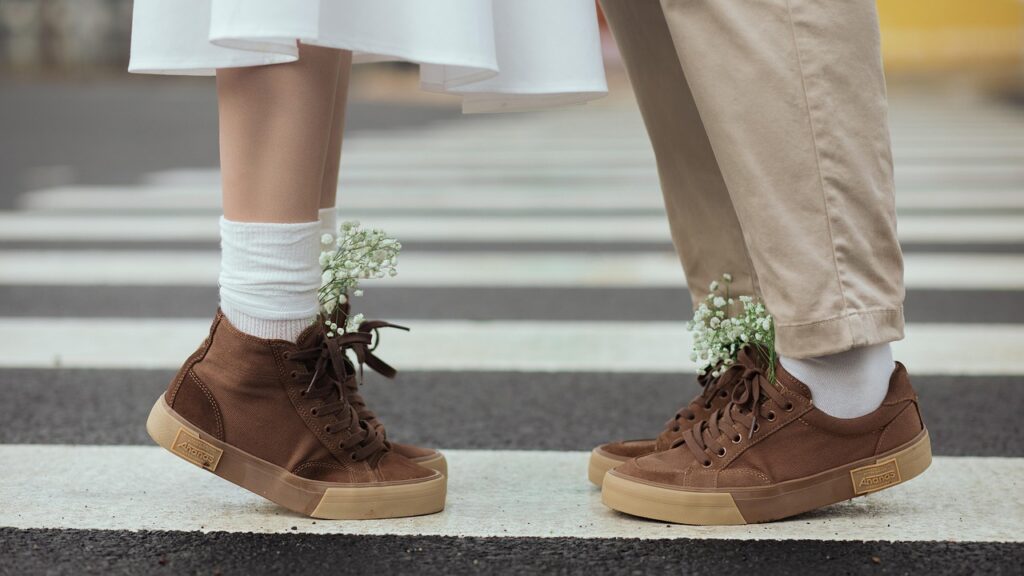
I love wearing trainers for comfort, as I love walking. A few years ago, I grew tired of the shoddy quality and high prices of high-street-branded trainers, so I began searching for alternatives. My friend suggested the Vegetarian Shoe store in Brighton. I’ve been buying my trainers there ever since. Thanks B!
Vegetarian Shoes began in 1990 when owner Robin handcrafted each pair of shoes. Back then, the shop only had one basic lace-up style. The inspiration for shoes started when the owner left art college and became inspired by the idea of recycling car tyres into soles, as seen in parts of Africa. As a vegetarian, she was determined to avoid using leather, so she began experimenting with alternative materials.
Eventually, the creator stumbled upon synthetic microfiber fabric used in yachting upholstery, which resembled leather in appearance and texture but was breathable, unlike other plastics.
As demand grew, so did their range. Every item was made to order, and the shop couldn’t keep up. So, they took the material to a footwear factory to scale up production. This allowed them to offer stock for mail-order customers across the UK and beyond.
Their products, while no longer handmade, are still made to their exclusive specifications in factories across the UK and Europe, including one historic co-op established in 1881.
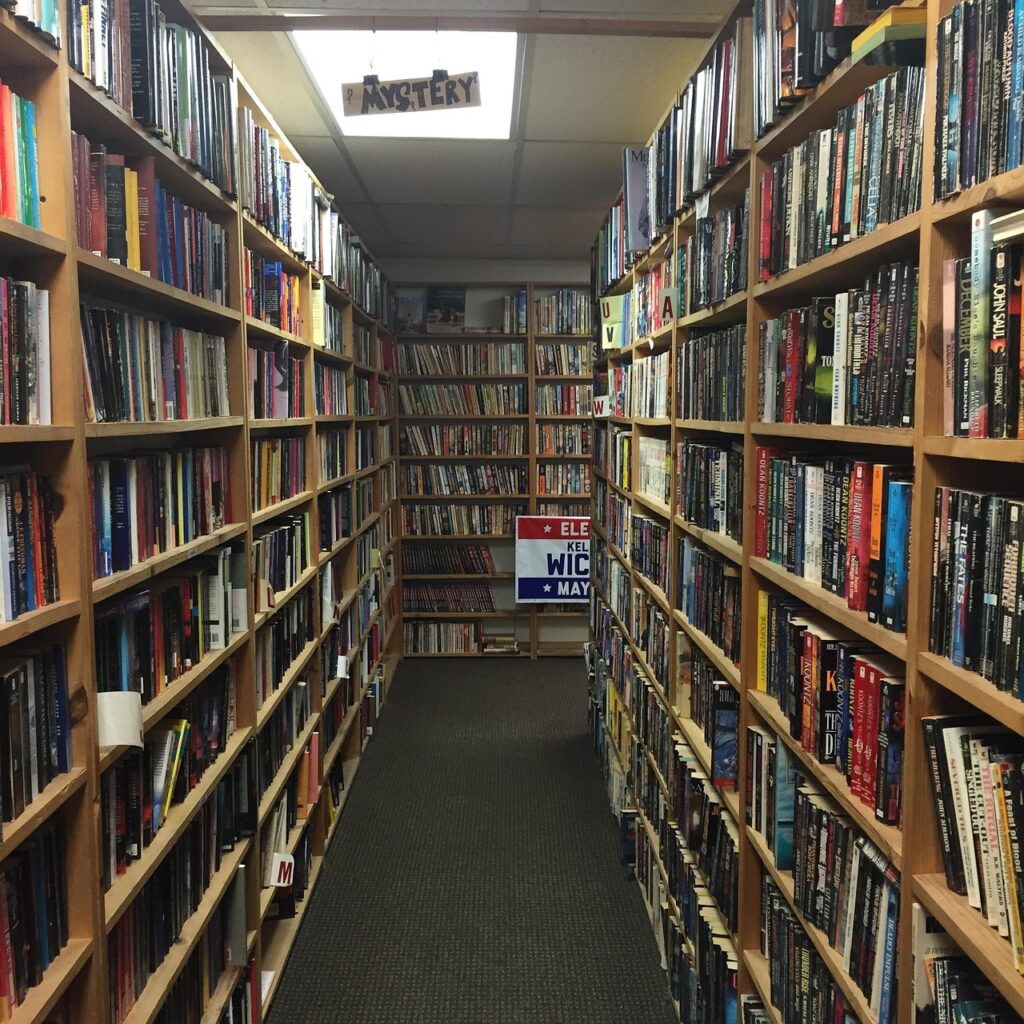
Wob (World of Books Group Limited) is a UK-based online retailer specialising in second-hand books. Operating under the brands Wob, Ziffit, and Shopiago, it became the UK’s largest used book retailer by 2018. The company primarily sources unsold books from UK charity shops and resells them online or wholesale to recyclers, with approximately 80% of the books being recycled. In 2019, Wob achieved B Corporation certification.
Wob buys books in bulk, paying by weight rather than by individual title. It utilises proprietary software to evaluate each book’s resale potential and determine pricing. Besides purchasing from charity shops and recycling firms, the company also acquires books directly from consumers via Ziffit, a sister brand offering a “scan and send” app. In 2010 alone, Wob recycled twenty-six million books.
The company is part of the World of Books Group, which includes Ziffit and Shopiago—both re-commerce platforms. The group defines itself as a for-profit business operating within a circular economy.
Founded in 2002 by Simon Downes, Ben Maxfield, and Michael Laundon, the business initially sold books sourced from car boot sales on eBay. By 2009, its annualised turnover was £5 million, with a projected turnover of £8.5 million. That year, the company processed 140 tonnes of books weekly (around 300,000 books), purchased from charities at £75 per tonne.
World of Books received the Worthing Business Award for New Business of the Year in 2009. It was ranked 22nd in the Sunday Times Fast Track 100 in 2012 and 197th in the Sunday Times HSBC International Track 200 in 2018.
In 2016, Bridges Fund Management acquired a majority stake in the business for £13 million. At that time, Wob was collecting over 25,000 tonnes of books annually from 3,700 charity shops—half the estimated UK market volume.
World of Books is a brilliant website for any bookworm as it allows you to buy books cheaply and resell unwanted books via their Ziffit app. Their range is excellent, and their delivery times are fast.
trabantbettina

Bettina Anna Trabant, Founder of Life Organised, your professional organising and decluttering service in East London. Eco-conscious minimalist and avid tea drinker,