Introduction – Fear of Letting Go for Fear of Damaging the Environment
“The great challenge of the twenty-first century is to raise people everywhere to a decent standard of living while preserving as much of the rest of life as possible.” ― Edward O. Wilson.
It is abundantly clear to all but a small minority that climate change is a reality and that we urgently need to take action to ensure humanity’s survival and continued well-being.
Environmental damage is evident all around us. Forests are dying, litter is everywhere, and polluted rivers are very visible, even to non-scientists. It is beyond the scope of this essay to delve into the details of this. For more info, consult the OECD website, which gives an overview of the state and health of the UK’s environment.
Overconsumption is a significant issue, as we live under an economic system that requires growth to sustain itself. Some economists argue that Capitalism can survive without economic growth, but to me, this seems impossible in the long run. Read up on the links included above or do a quick Google search, but this is not the place to discuss economics.
According to the Global Footprint Network, as of 2023, humanity is consuming resources at a rate 1.75 times faster than the Earth can regenerate them. This means that if every person on the planet lived like the average person in the U.S., we would need 5 Earths to sustain our current lifestyles. (Overconsumption.Org)
If you’re team ‘I couldn’t care less about environmental damage’ or team ‘I find it easy to part with belongings’, this article isn’t for you. But if the below quote from Eco365store appeals to you, read on:
“The less you waste, the more you save the planet.”
Fear of Letting Go for Fear of Damaging the Environment
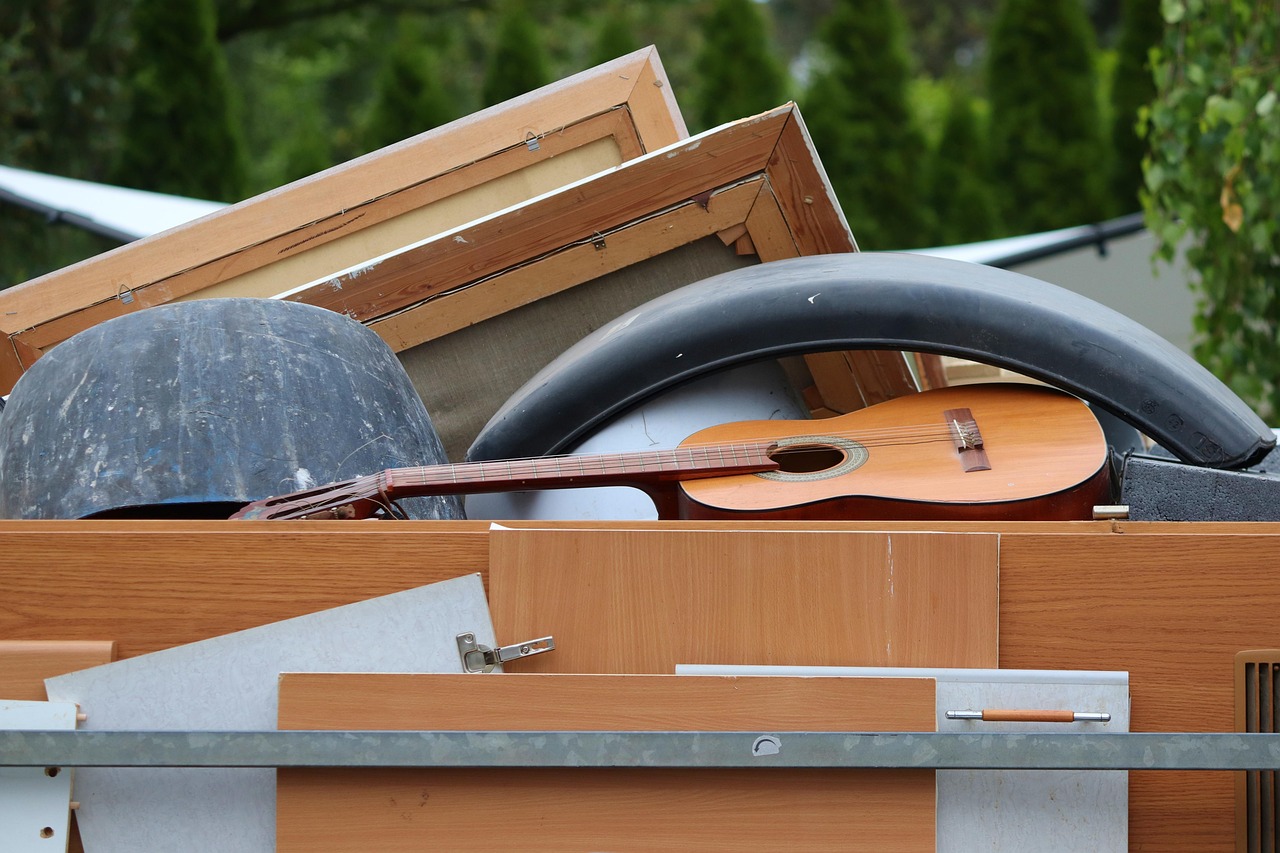
I was scanning the APDO private Facebook group the other day as I was looking to solve a professional problem. While doing so, I came across a dilemma from one of my colleagues. She was trying to advertise her services on Facebook but kept being told that decluttering was not sustainable. This is a common misconception; many of my clients feel the same. They hold onto possessions because they think that getting rid of them would damage the environment.
I hate to break this to you, but holding on to something doesn’t save the environment. Think about it logically. Does a jumper you never wear, but keep in your wardrobe, do anything for the planet? Do your unread books on the shelf prevent environmental degradation? No, they don’t. They sit there acquiring dust. Rather than deal with them now and in a sustainable way, more on that later, your relatives will have to make a decision about where it goes once you’ve died. You are just delaying a decision.
The damage was done when making a purchase. Let that sink in! Of course, there are all sorts of economic reasons why production harms the environment, but this is not an article about economics or environmental politics. This article is about us as individuals and our relationship to sustainability.
To illustrate my point, I’ll provide an example from my past life as a museum curator. When museums were first established during the 19th Century, there was no Joint collection strategy and no Museums Association that formulated policy. Museums often took in everything and anything, regardless of its relevance to their collection. During the later part of the 20th Century, many organisations realised that their storage areas were filling up and that they couldn’t fulfil their duty to care for an object. Today, museums are more selective about which items they accept into their collections, often declining donations.
As individuals, we can do the same. We can curb our ever-increasing shopping habits and replace them with other activities. When was the last time you went on a date with your lover? When did you visit a museum?
“We are living on this planet as if we have another one to go to.” – Terry Swearingen.
Despite the cost-of-living crisis and shifting consumer habits, shopping is still a significant pastime. According to the Attest website, 65% of British people shop weekly:
Trend 4: Shopping frequency is up
Despite having less money to spend, consumers aren’t going to the shops any less frequently; we see a 6.2 point increase in people shopping “daily” and “weekly”, to 65.5% (a trend largely driven by shoppers over 40).
According to the Evening Standard, 80% of shoppers buy clothes they never wear. The website The Street provides us with a list of stuff we buy but never use, including sports equipment and linen suits.
For more information on shopping habits and how to curb your shopping, check out my previous article How to Avoid Shopping? I have covered this topic elsewhere on my blog and have written extensively on no-buy challenges.
This is all well and good for future purchases, but how do we deal with items that we already bought and don’t ever use?
How to declutter sustainably
“There is no such thing as ‘away’. When we throw anything away, it must go somewhere.” – Annie Leonard.
The above quote is absolutely apt, but unfortunately, many people don’t think much about where their waste goes after it is thrown in the bin. Many years ago, I visited a waste disposal plant in Berlin, which was highly fascinating and insightful. It might contribute towards waste reduction if more people gave it a second thought. The UK, after all, produce a whopping 215 million tonnes of waste each year, of which a share of 1.3 million tonnes falls to each individual.
Here is the thing, you don’t have to contribute massively to landfill when parting with personal possessions. We have already touched on ways to reduce your shopping, to avoid recycling or tossing as much as possible. Let me outline some ways you can give your items a second home elsewhere.
Charity Shops
There are 11,000 charity shops in the UK, dotted throughout the high streets of local towns and cities. Most of these shops are great for picking up bargains and donating unwanted items to a good cause. These charities support different causes, such as research into cancer or Mental health.
Most charity shops will accept clothing, books, cutlery, and toys, but not all shops accept all items. If you wish to donate furniture, check out the British Heart Foundation, and if you have old electronics in good working order, Sue Ryder is your place.
Gumtree
My next tip for removing unwanted items after a clear-out is Gumtree. Gumtree is the UK’s first online platform, founded in 2000 by two friends. They aimed to have an online website where people settling into a new house or city could find anything they might need at an affordable price and from a local seller.
According to their Facebook page, their motto is as follows:
At Gumtree, we help make ‘Good Finds’ happen as we believe everything can find new purpose. From great deals that save you a few extra pounds, to finding a buyer who will enjoy something as much as you did. Good for your pocket & the planet
According to their website, Gumtree has 9.2 millionunique visitors per month and reaches 18% of the online adult population. With 770m page views monthly, Gumtree is a great way to sell or give away unwanted items.
eBay
eBay is another excellent way of discarding unwanted items and making cash from them.
It is an American e-commerce company founded in 1995 in San Jose, California. eBay facilitates sales through its website, both consumer-to-consumer and business-to-consumer.
The website is free for buyers, but sellers are charged fees for listing items and an additional fee when items are sold.
In addition to eBay’s original auction-style sales, you can now buy stuff instantly without an auction.
World of Books
World of Books is a website where you can make money by selling unwanted books. It aims to be part of the circular economy, and they sell or recycle all items. They believe that books should be read multiple times:
We believe that no book should only be read once or have a single owner; this forms the basis of everything we do.
To use the service, simply scan a barcode through their app, and World of Books will provide you with a quote. You won’t get rich doing this, but you can make the odd 10er here and there. After scanning all your books and completing the sale in the app, you need to wrap and label your books and wait for them to be picked up from your house at an agreed-upon time and date. Simple.
The Freecycle Network
The Freecycle Network, Freecycle for short, is a private, non-profit organisation founded in 2003 and registered in Arizona.
Freecycle coordinates a worldwide network of groups to divert reusable goods from landfills and give them a new lease on life. It provides an online register for local groups, where people can advertise their unwanted goods for someone in the local area to reuse.
Joining the Freecycle Network is entirely free, and one of the stipulations is that everything advertised on their website is entirely free.
Friends
Friends, relatives and colleagues are another great way of discarding unwanted items. Books you have read and enjoyed but might not want to read again are great for passing on. So are children’s toys and clothes that your offspring might have outgrown.
Little Free Library
Little Free Libraries exist in many towns and cities worldwide and are an excellent way to give your books a new lease of life by lending them to someone else to read.
There are over 150,000+ libraries in 110+ countries. According to the Little Free Library website, their mission is to be a catalyst for inspiring readers:
Our mission is to be a catalyst for building community, inspiring readers, and expanding book access for all through a global network of volunteer-led Little Free Libraries.
Our vision is a Little Free Library in every community and a book for every reader. We believe all people are empowered when the opportunity to discover a personally relevant book to read is not limited by time, space, or privilege.
They aim to provide 24/7 book access, especially in high-need areas. They further aim to champion diverse books and foster the creation of new libraries.
Clothing Banks
Clothing banks or clothing bins are containers located in many cities worldwide, where people can donate old clothing to a charity.
Traid and the Salvation Army are popular providers of clothing banks within the UK.
Car Boot Sale
The final option to eliminate unwanted items is participating in a car boot sale. Car boot sales are a type of market where people sell unwanted items from the back of their cars. They are very popular in the UK. For a list of car boot sales in London, click here.
Swap Party
If all the above seem a bit boring or too much like hard work, why not organise a Swap Party?
Invite your friends for coffee or something stronger and ask them to bring unwanted possessions that you can swap with each other. You see, one person’s nightmare is another person’s joy.
Conclusion – Fear of Letting Go for Fear of Damaging the Environment
Of course, I am fully aware of some of the issues with donating and recycling. Charity shops will only keep books on the shelf for a limited time, eBay makes a profit, etc. Putting old clothing in donation banks is riddled with problems; one detailed example is
Clothing donation banks face several challenges, including overflowing bins, hygiene concerns, and the export of low-quality garments to other countries, which contributes to environmental harm and economic disruption. Additionally, there is limited infrastructure for sorting and recycling textiles, and some operators make misleading claims about the fate of donated items. Local demand for these donations is often low, resulting in many clothes ending up in landfills or being shipped overseas, which undermines local textile industries and creates waste problems in recipient nations.
Hence, the saying, reduce, reuse, recycle, and toss as a last resort, should apply in our lives. However, I hope to have shown that holding on to items for fear of environmental damage is not the solution. There are a plethora of problems, from stress to overwhelm and time wasting, that result in keeping too much clutter in your home.
trabantbettina

Bettina Anna Trabant, Founder of Life Organised, your professional organising and decluttering service in East London. Eco-conscious minimalist and avid tea drinker,