

Hoarding disorder is much more than having a cluttered or untidy home.
For someone with hoarding disorder, possessions can become extremely difficult to discard, regardless of their monetary value. Over time, the accumulation of belongings can make rooms difficult or impossible to use and can have a profound effect on everyday life, relationships, health and wellbeing.
It is also important to understand that hoarding disorder is a recognised mental health condition, not a character flaw, a sign of laziness or simply a failure to keep a home tidy.
This guide explains what hoarding disorder is, how it differs from ordinary clutter and collecting, why letting go can be so difficult, the potential risks, and what kind of help is available.
Important: I intend this article for information and education. It cannot diagnose hoarding disorder or replace assessment or treatment from a qualified healthcare professional.
What is hoarding disorder?
Hoarding disorder is characterised by a persistent difficulty discarding or parting with possessions because of a perceived need to save them or distress associated with getting rid of them. The NHS defines hoarding disorder as follows:
Hoarding disorder is a mental health condition where you collect lots of things and find it very difficult to get rid of them, even if it’s affecting your life. (NHS).
A more detailed definition comes from the WHO:
“Hoarding disorder is characterised by accumulation of possessions due to excessive acquisition of or difficulty discarding possessions, regardless of their actual value. Excessive acquisition is characterized by repetitive urges or behaviours related to amassing or buying items. Difficulty discarding possessions is characterized by a perceived need to save items and distress associated with discarding them. Accumulation of possessions results in living spaces becoming cluttered to the point that their use or safety is compromised. The symptoms result in significant distress or significant impairment in personal, family, social, educational, occupational or other important areas of functioning.” (World Health Organisation)
As possessions accumulate, living spaces can become so cluttered that their normal use is compromised. For example, someone may no longer be able to comfortably use their kitchen, bathroom, bedroom, stairs or other parts of their home.
The possessions themselves may have little or no monetary value. They might include:
- Newspapers and magazines
- Books
- Clothing
- Paperwork
- Post and advertising leaflets
- Food containers and packaging
- Household items
- Broken objects that someone intends to repair
- Items intended for future projects
- Free or unwanted items
- Sentimental possessions
- Items belonging to deceased relatives
- Things that might be useful “one day”
- Food
- Animals
- Data (emails, digital photos etc)
What matters isn’t simply how much someone owns. It is the combination of difficulty discarding possessions, the accumulation of clutter and the impact this has on the person’s life.
Hoarding disorder is recognised as a distinct disorder in modern diagnostic classifications. Since June 2018, the World Health Organisation’s ICD-11 includes hoarding disorder, reflecting its status as a recognised mental health condition. (World Health Organisation)
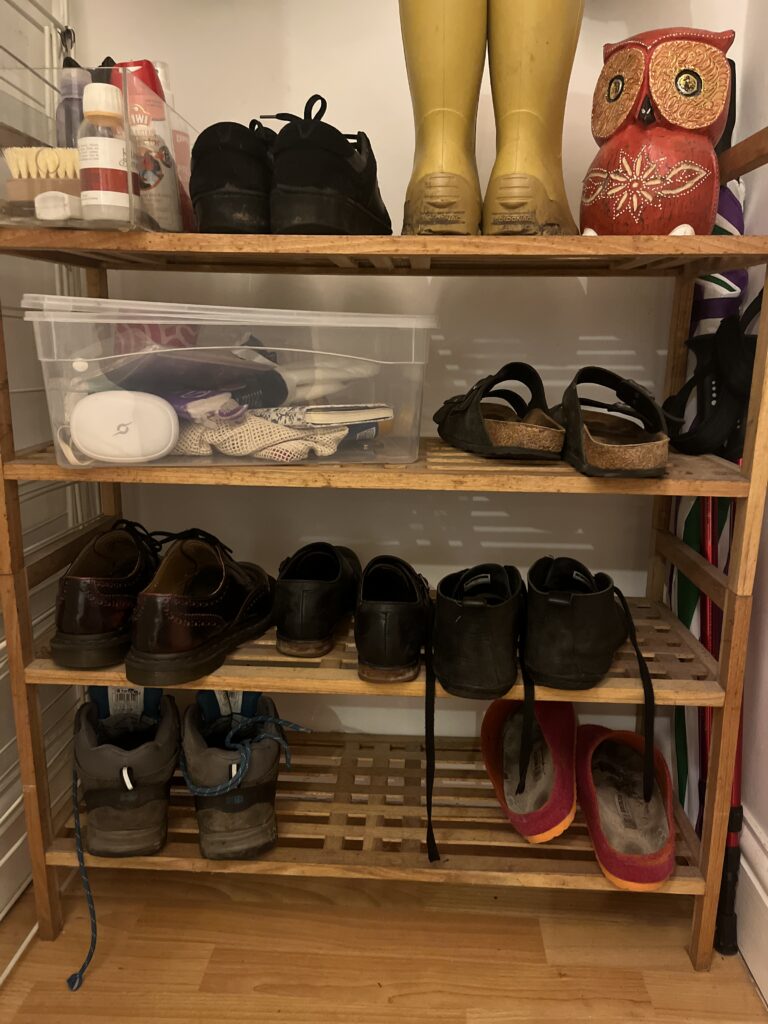
Hoarding disorder isn’t the same as being untidy
Most people have clutter from time to time.
You might have piles of paperwork waiting to be dealt with, clothes that need sorting or a cupboard full of things you haven’t used for years. A busy period of life can easily result in a messy home.
That doesn’t necessarily mean someone has hoarding disorder.
With hoarding disorder, the difficulty is more fundamental. The person can experience significant distress when faced with discarding possessions and may feel an intense need to keep them.
The accumulation can eventually interfere with everyday activities and the use of the home.
For example:
Ordinary clutter:
You have a pile of paperwork on the dining table because you haven’t had time to sort it.
Possible hoarding problem:
You have accumulated years of paperwork throughout the house and feel unable to discard any of it, even though there is nowhere left to put it.
The difference isn’t simply whether a home looks tidy. It’s the relationship with possessions and the impact of the accumulation on daily life.
Hoarding disorder isn’t the same as collecting
The main difference between collecting and hoarding is:
- How you organise the items
- How much it affects your life (Mind)
Collecting is not necessarily problematic.
Someone might collect books, stamps, records, antiques or memorabilia. A collection can be an important and enjoyable part of someone’s life.
A collection is generally organised and accessible. The person knows what they have and can usually use or enjoy it.
Hoarding, by contrast, can involve large quantities of possessions that are difficult to organise or access. Clutter may spread throughout living areas and prevent rooms from being used for their intended purposes.
For example, a person who collects books may have shelves containing hundreds of carefully organised books.
Someone experiencing hoarding disorder might have books stacked on floors, furniture and stairs, with many of them inaccessible.
The issue isn’t owning a lot of things.
It’s the combination of difficulty discarding, accumulation and significant impairment or distress.
To read more about collecting vs clutter, check out my article: What’s the Difference Between Collection and Clutter?
Why do people hoard?
There isn’t one single explanation for hoarding disorder, and it is not yet fully understood.
People can develop hoarding difficulties for different reasons, and several factors may be involved.
Research and clinical experience suggest that people who hoard may experience difficulties with:
- Making decisions
- Categorising possessions
- Assessing whether something is useful
- Processing information
- Tolerating uncertainty
- Managing emotions
- Letting go of sentimental objects
- Resisting the urge to acquire things
People may also attach strong emotional meaning to possessions.
An apparently ordinary object might represent a person, a memory, an opportunity or a part of someone’s identity.
Someone might think:
“I might need this someday.”
“I paid good money for it.”
“It would be wasteful to throw it away.”
“This reminds me of my mother.”
“I haven’t finished with it yet.”
“I need to repair it.”
“What if I throw it away and regret it?”
These thoughts can make seemingly simple decisions extremely difficult.
Is hoarding caused by trauma?
You may have heard that hoarding disorder is caused by childhood trauma or deprivation.
The reality is more complicated.
Some people who experience hoarding difficulties have experienced traumatic or stressful events, loss or deprivation. Others have not.
A stressful life event, such as bereavement, relationship breakdown, illness, retirement or another major change, may contribute to difficulties with possessions for some people.
But there is no single cause of hoarding disorder.
It is therefore unhelpful to assume that everyone who hoards has experienced trauma.
Hoarding may be a symptom of other conditions such as severe depression, early stages of dementia or psychotic disorders such as schizophrenia.
What are the signs of hoarding disorder?
Possible signs include:
1. Extreme difficulty discarding possessions
The person may experience considerable distress at the idea of throwing things away, donating them or otherwise getting rid of them.
2. Strong attachment to possessions
Objects may have significant emotional meaning or be associated with memories, people or future possibilities.
3. Excessive acquisition
Some people with hoarding disorder also acquire large numbers of possessions, including things they don’t need.
However, acquisition is not essential to having hoarding disorder.
4. Difficulty organising possessions
Objects may become mixed together in piles, boxes, bags or rooms.
5. Living spaces become unusable
Rooms may gradually stop being used for their intended purpose.
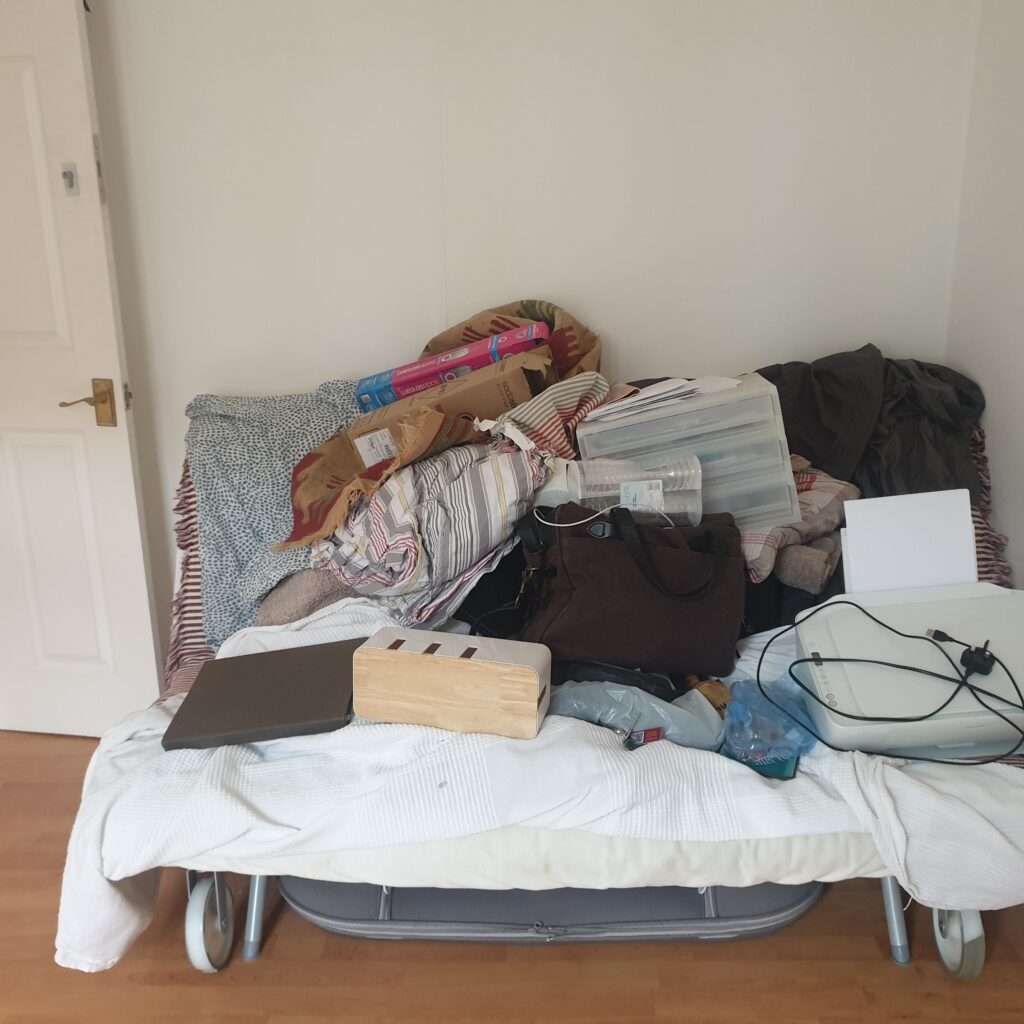
A bed may become covered with belongings.
A bath may be filled with possessions.
The kitchen worktops may become inaccessible.
Stairs or doorways may become obstructed.
6. Avoidance
The person may avoid dealing with possessions because the decisions feel overwhelming.
They may also avoid allowing people into their home because of embarrassment or fear of judgement.
7. Significant distress or impairment
The accumulation may affect relationships, work, social activities, finances, health or the ability to carry out everyday activities.

Why is it so difficult to let things go?
One of the biggest misconceptions about hoarding is that the person simply needs to “be ruthless”.
It isn’t that simple.
Discarding an object can involve making a decision, tolerating uncertainty and managing difficult emotions.
For someone with hoarding disorder, throwing away a seemingly insignificant object may trigger anxiety, guilt, sadness or fear.
There can also be a constant stream of questions:
- What if I need it later?
- What if someone else could use it?
- What if I regret getting rid of it?
- What if I am wasting money?
- What if this is important?
- What if I need this information?
- What if I never find another one?
- What if throwing this away means I’m losing the person it reminds me of?
The result can be decision paralysis.
Avoiding the decision provides temporary relief, so the person puts the item back.
Unfortunately, that can reinforce the cycle.
What is the difference between clutter and hoarding?
A useful way of thinking about it is to ask what the clutter is doing to the person’s life.
Clutter becomes particularly concerning when:
- Rooms cannot be used normally
- Important items cannot be found
- Cooking, bathing or sleeping becomes difficult
- Doors or windows are blocked
- Stairs become hazardous
- The person cannot invite people into their home
- Relationships are seriously affected
- The person experiences significant distress
- The accumulation creates health or safety risks
South London and Maudsley NHS Foundation Trust similarly describes hoarding as a significant problem when clutter interferes with everyday living or causes substantial distress or negatively affects quality of life.
Hoarding is considered a significant problem if:
- The amount of clutter interferes with everyday living – for example, the person is unable to use their kitchen or bathroom and cannot access rooms
- The clutter is causing significant distress or negatively affecting the quality of life of the person or their family – for example, they become upset if someone tries to clear the clutter and their relationship suffers (South London and Maudsley)
What are the risks associated with hoarding?
Hoarding can have serious consequences.
Fire risk
Large quantities of possessions can increase the amount of combustible material in a home and may obstruct escape routes.
Blocked doors, hallways and staircases can make evacuation particularly difficult.
Falls
Objects stored on floors and stairs can create trip hazards.
Difficulty accessing essential facilities
In severe cases, people may be unable to safely use their:
- Kitchen
- Bathroom
- Bedroom
- Heating
- Washing facilities
- Electrical systems
Hygiene and sanitation
Accumulated possessions can make cleaning difficult and may contribute to hygiene problems.
Social isolation
Embarrassment or fear of judgement may cause someone to withdraw from family and friends.
They may stop inviting people into their home or avoid asking for help.
Relationship difficulties
Family members may become frustrated or distressed by the situation.
Arguments about possessions can become frequent and relationships can suffer.
These risks are important, but they should be discussed without shaming the person.

Why “just throw it all away” doesn’t work
One of the most important things to understand about hoarding disorder is that a clearance is not the same thing as treatment.
It may be possible to remove possessions from a property, but if the underlying difficulties haven’t been addressed, the person may experience considerable distress and the accumulation can return.
An enforced clear-out can also damage trust.
A person who already fears losing their possessions may become even more reluctant to accept help if they believe that accepting help means someone will take control of their belongings.
This is why compassionate, person-centred support is so important.
The aim should not simply be:
“How quickly can we empty this house?”
Instead, the questions should be:
“How can we make this home safer?”
“How can we help this person regain use of their living spaces?”
“How can we support better decisions about possessions?”
“How can we help without taking away the person’s autonomy?”
Can hoarding disorder be treated?
Yes.
Hoarding disorder can be difficult to treat, but help is available.
Cognitive behavioural therapy (CBT) is one of the main psychological approaches used for hoarding disorder. Treatment can help someone understand their thoughts and beliefs about possessions and develop strategies for making decisions and discarding items.
Practical work may form part of treatment too. The American Psychiatric Association lists CBT as one of their main treatments for hoarding disorder:
Randomized controlled trials have established cognitive behavioral therapy (CBT) for hoarding disorder as an effective treatment. During CBT, individuals gradually learn to discard unnecessary items with less distress—diminishing their exaggerated perceived need or desire to save these possessions. They also learn to improve skills such as organization, decision-making, and relaxation.
Treatment may also need to address other difficulties that occur alongside hoarding.
These might include anxiety, depression or other mental health problems.
Medication may sometimes be considered by a healthcare professional, particularly where other conditions are present. It should not be assumed that medication alone will resolve hoarding difficulties.
What should you do if you think you have hoarding disorder?
The first step doesn’t have to be clearing your entire home.
In fact, trying to tackle everything at once can feel completely overwhelming.
Instead, consider talking to your GP about what you’re experiencing.
You might say:
“I’m finding it extremely difficult to get rid of possessions and the amount of stuff in my home is affecting my everyday life. I’d like some help.”
Your GP can discuss your situation and advise you about appropriate support.
You don’t have to wait until your home reaches a crisis point before asking for help.
What if you’re worried about someone else?
Helping someone who hoards can be challenging.
Your first instinct might be to start throwing things away.
Try not to.
Instead, focus on the person rather than the possessions.
Start with empathy
Avoid words such as:
- Lazy
- Dirty
- Disgusting
- Selfish
- Crazy
- Hopeless
Shame rarely makes it easier for someone to ask for help.
Talk about safety
Instead of saying:
“Your house is a disaster.”
you could say:
“I’m worried that the things on the stairs could make it difficult for you to get out safely.”
That makes the conversation about a specific risk rather than criticising the person.
Listen
Ask questions about what makes letting go difficult.
You may learn that something which looks like rubbish to you has a very different meaning to the person who owns it.
Encourage professional help
A GP or mental health professional can help assess what’s happening and identify appropriate treatment and support.
South London and Maudsley NHS Foundation Trust recommends encouraging someone who is hoarding to speak to their GP and emphasising health and wellbeing rather than threatening them with a clear-out. (South London and Maudsley)
How can a professional organiser help?
A professional organiser can play a useful role, but it is important to understand the limits of that role.
A professional organiser does not diagnose or treat hoarding disorder unless they have the appropriate clinical qualifications.
However, practical organising support can sometimes complement professional mental-health treatment.
Depending on the person’s circumstances, practical support might include:
- Creating safer pathways
- Helping restore the use of essential rooms
- Breaking a large project into manageable stages
- Establishing simple categories
- Supporting decision-making
- Sorting possessions alongside the client
- Developing systems for items that are being kept
- Creating routines for maintaining progress
- Helping organise paperwork
- Supporting the person without making decisions on their behalf
The person’s involvement is crucial.
The goal isn’t to take over their home.
It’s to help them develop greater control over it.
The importance of a compassionate approach
There is a temptation to focus entirely on the physical environment when someone has accumulated a large amount of stuff.
But the possessions are only part of the picture.
Behind the clutter is a person who may be experiencing anxiety, grief, shame, indecision, loneliness or an intense emotional attachment to their belongings.
That doesn’t mean that safety concerns should be ignored.
It means that safety and compassion need to exist together.
A successful intervention isn’t simply a house that looks better.
It’s a person who feels safer, more supported and more able to make decisions about their possessions.

Can someone with hoarding disorder recover?
Recovery can look different for different people.
For one person, it might mean being able to use every room in their home again.
For another, it might mean being able to make decisions about possessions without becoming overwhelmed.
Someone else may focus on reducing acquisition and preventing the situation from becoming worse.
The goal doesn’t necessarily have to be a perfectly minimalist home.
For someone with hoarding disorder, a safe and functional home may be a much more meaningful goal than a spotless or minimalist one.
Progress can be gradual.
Small improvements can matter.
What not to do when helping someone with hoarding disorder
If you’re supporting a friend or relative, avoid:
Don’t secretly throw things away
This can seriously damage trust.
Don’t shame or ridicule them
The situation may already be causing considerable embarrassment.
Don’t assume you know what is important
Something that looks worthless to you may have significant meaning to them.
Don’t insist on doing everything at once
Large-scale projects can be overwhelming.
Don’t focus only on appearance
A home doesn’t have to look perfect to become safer and more functional.
Don’t promise that you’ll “sort everything out”
The person’s involvement and autonomy matter.
Don’t assume that clearing the property has solved the problem
Without addressing the underlying difficulties, possessions may accumulate again.
A gentle first step
If you’re living with hoarding disorder, you don’t have to start by tackling the whole house.
Start with one small area that will make everyday life easier or safer.
For example:
- Clear one pathway
- Make one chair usable
- Clear one section of a kitchen worktop
- Make the bed accessible
- Clear one small area around the front door
- Create somewhere safe to put important paperwork
The objective isn’t to transform everything overnight.
It’s to create one small improvement that makes life a little easier.
Frequently asked questions about hoarding disorder
Is hoarding disorder a mental illness?
Yes. Hoarding disorder is recognised as a mental health condition and is included in modern diagnostic classification systems, including ICD-11. (World Health Organization)
Is hoarding disorder the same as OCD?
No.
Hoarding disorder was historically associated with OCD, but it is now recognised as a distinct disorder. Some people with hoarding disorder may also have OCD or other mental health conditions, but hoarding disorder and OCD are not the same thing. (Oxford Health NHS Foundation Trust)
Does everyone who has a cluttered home have hoarding disorder?
No.
Clutter is common and can have many causes. Hoarding disorder involves persistent difficulty discarding possessions together with significant accumulation and associated distress or impairment.
Can you have hoarding disorder without buying lots of things?
Yes.
Excessive acquisition can occur, but the defining difficulty is not simply shopping or acquiring possessions. Difficulty discarding and the resulting accumulation are central features.
Should I throw away someone’s possessions if they hoard?
Generally, you should not secretly or forcibly dispose of someone’s possessions simply because you believe they are unnecessary.
There may be situations involving immediate health or safety risks where professional or statutory intervention is necessary, but this is different from carrying out an ordinary decluttering project without the person’s involvement.
Can hoarding disorder be cured?
Hoarding disorder can be treated and people can make meaningful improvements. Treatment and recovery can take time, and ongoing support may sometimes be necessary.
Can a professional organiser help with hoarding?
Yes, a professional organiser can provide practical support, particularly when working collaboratively with the person and, where appropriate, alongside mental-health professionals.
However, professional organising is not a substitute for psychological assessment or treatment.
Final thoughts
Hoarding disorder is complicated.
It isn’t simply a matter of being messy, disorganised or unwilling to throw things away.
For someone experiencing hoarding disorder, possessions can carry enormous emotional significance, and the process of discarding can be genuinely distressing.
That is why compassion matters.
It is possible to work towards a safer, more functional home without humiliating or overwhelming the person who lives there.
If you or someone you know is struggling with hoarding, you don’t have to tackle the entire problem at once.
One conversation. One decision. One small area. One step at a time.
And sometimes, asking for help is the most important first step of all.
Further help and information
If you are concerned about hoarding disorder, consider speaking to your GP. They can discuss your circumstances and advise about appropriate mental-health support.
The NHS-affiliated South London and Maudsley NHS Foundation Trust also provides information about hoarding disorder, including symptoms, risks, treatment and seeking help. (South London and Maudsley)
The World Health Organization’s ICD-11 provides the international classification framework in which hoarding disorder is recognised. (World Health Organization)
For professional guidance on OCD and related conditions, NICE provides clinical guidance for healthcare professionals. (NICE)
A note from Life Organised
At Life Organised, I believe that organising support should be practical, respectful and compassionate.
When someone is struggling with a large amount of clutter or possessions, the answer isn’t to judge them or simply remove everything.
The aim is to understand what is making organisation difficult, work at a manageable pace and help create a home that is safer, more functional and easier to live in.
Where hoarding disorder or significant mental-health difficulties are involved, practical organising support should sit alongside appropriate professional care rather than replace it.
You don’t have to create a perfect home. You just need to create a home that works for you.
Need help sorting your house? Get in touch by phone or email, and we can discuss your needs further.
trabantbettina

Bettina Anna Trabant, Founder of Life Organised, your professional organising and decluttering service in East London. Eco-conscious minimalist and avid tea drinker,