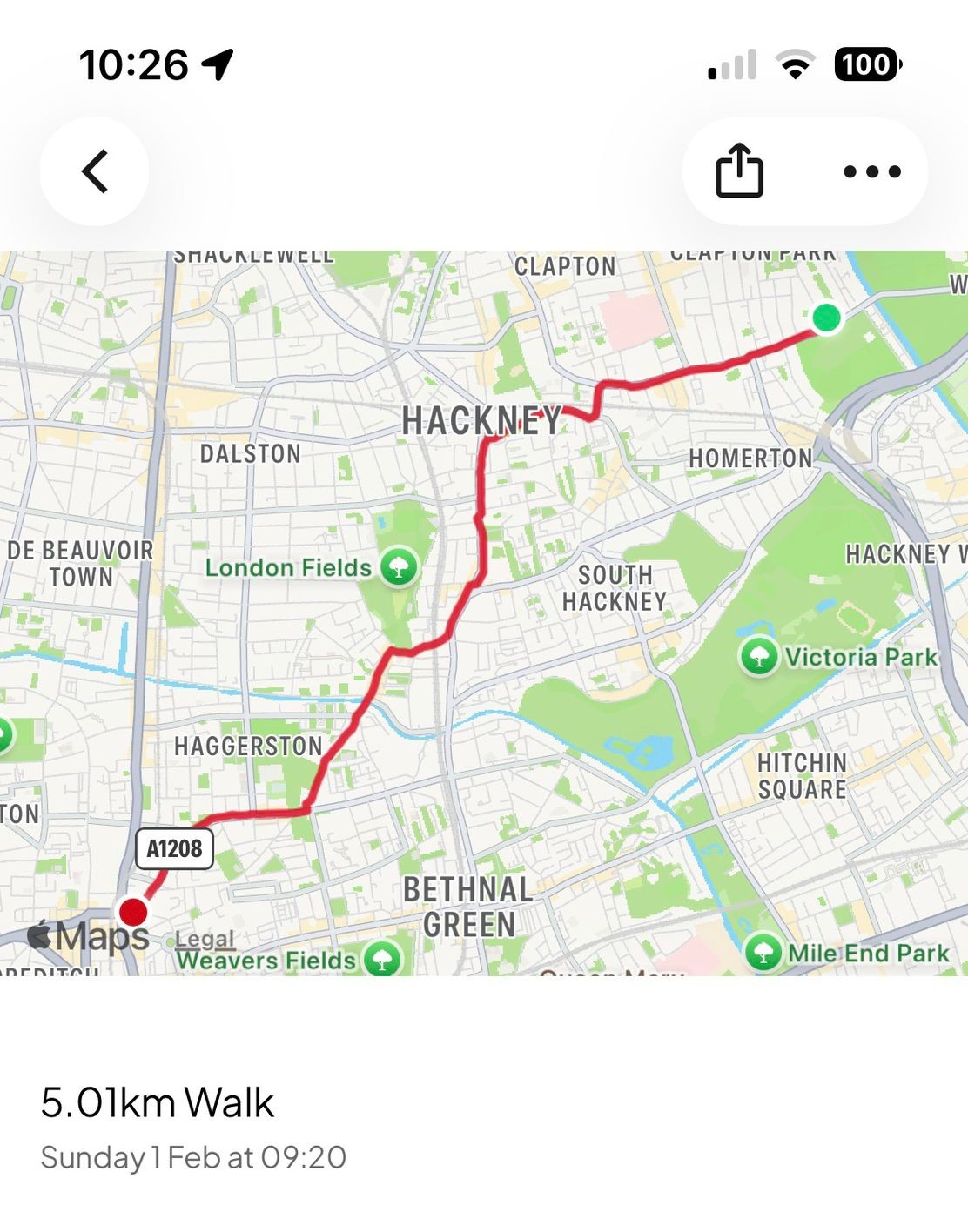
‘Walking is simple, free and one of the easiest ways to get more active, lose weight and become healthier.’
(NHS)
A month of walking 5k daily – Introduction
Long-time readers of my blog will know that I am an avid walker and have done several long hikes for Cancer Research and other charities. You can read about my experiences and my relationship with walking here and here.
As part of my 12 months of self-experiments, I completed a 5k daily walking challenge this February. Before I let readers in on how I got on, I want to briefly explain why many health experts and I think walking is a good form of exercise, especially for those not naturally sporty.
The Benefits of Walking as a Form of Exercise
In a world filled with complex fitness trends, expensive gym memberships, and high-intensity workout programs, one of the most powerful forms of exercise remains beautifully simple: walking. It requires no special equipment, no advanced training, and can be done almost anywhere. Yet despite its simplicity, walking offers remarkable physical, mental, and emotional benefits.
Walking is a great way to improve or maintain your overall health. Just 30 minutes every day can increase cardiovascular fitness, strengthen bones, reduce excess body fat, and boost muscle power and endurance.
1. Improves Heart Health
Walking is an excellent cardiovascular exercise. When done consistently, it strengthens the heart, improves circulation, and helps lower blood pressure. Regular brisk walking can reduce the risk of heart disease and stroke by improving cholesterol levels and supporting healthy blood vessels. Even 30 minutes a day can make a meaningful difference in long-term heart health.
2. Supports Weight Management
While walking may not burn calories as quickly as high-intensity workouts, it is highly effective when practised consistently. Walking boosts metabolism, helps regulate blood sugar levels, and contributes to long-term fat loss. Because it is low-impact and sustainable, many people find it easier to maintain as a long-term habit compared to more intense routines.
Hauling yourself around takes energy — and that’s reflected in the calories burned while walking.
A 150-pound person walking a mile in 20 minutes will burn about 74 calories, according to the American Council on Exercise Physical Activity Calorie Counter. Pick up the pace to a 15-minute mile, and you torch 113 calories.
(Positive Steps: How Walking Can Help You Lose Weight)
3. Strengthens Muscles and Joints
Walking engages multiple muscle groups, including the legs, hips, and core. It improves muscle endurance and helps maintain joint flexibility. Unlike high-impact activities, walking places minimal stress on joints, making it especially beneficial for older adults or individuals recovering from injury. Regular walking can also reduce stiffness and improve overall mobility.
4. Enhances Mental Health
One of the most immediate benefits of walking is its positive impact on mood. Physical movement stimulates the release of endorphins—natural chemicals in the brain that promote feelings of happiness and relaxation. Walking outdoors can amplify these effects, as exposure to fresh air and natural surroundings has been shown to reduce stress and anxiety.
In fact, studies from institutions like Harvard Medical School highlight how moderate exercise, such as walking, can help alleviate symptoms of depression and improve overall mental resilience.
5. Boosts Brain Function
Walking does more than clear your head—it actively supports brain health. Regular aerobic activity increases blood flow to the brain, improving memory, concentration, and cognitive function. Research from Stanford University has shown that walking can even enhance creative thinking by encouraging free-flowing ideas and problem-solving.
6. Improves Sleep Quality
People who walk regularly often report better sleep. Physical activity helps regulate the body’s internal clock and reduces stress levels, making it easier to fall asleep and stay asleep. A simple evening walk can help signal to the body that it’s time to unwind.
A morning walk outside, where you’re exposed to natural light, helps maintain your natural body clock. Walking can also help you relax and reduce stress, which can disrupt your sleep. One small trial of 59 people, published in Sleep Health journal, found that on the days people took more steps, they reported sleeping better and for longer.
(6 surprising health benefits of walking)
7. Encourages Social Connection
Walking can be both a solitary and a social activity. Joining a walking group or inviting a friend for a daily stroll provides opportunities for meaningful conversation and connection. This combination of movement and companionship can enhance both physical and emotional well-being.
8. Accessible and Sustainable
Perhaps the greatest advantage of walking is its accessibility. It requires no gym, no expensive gear, and no complicated training plan. Whether in a neighbourhood park, a busy city street, or on a treadmill at home, walking fits easily into daily life. Because it is low-risk and adaptable to different fitness levels, it is an exercise people can continue for years.
Walking may be simple, but its impact is profound. From strengthening the heart and muscles to improving mood, creativity, and sleep, it supports overall health in a balanced and sustainable way. In many cases, the most effective exercise is not the most intense—but the one you can consistently maintain. By incorporating regular walks into your routine, you take a steady, achievable step toward a healthier life.
A month of walking 5k daily – How did I get on?
I failed in my challenge of walking 5k daily. Utterly, miserably, and completely. There were numerous reasons why.
For the first week of the challenge, I was ill with a heavy cold and mild flu-like symptoms, and I struggled to leave the house on one day. On the other days, I dragged myself outside but did not consistently manage 5k. Sometimes I walked three, sometimes 4.5k.
The other reason was the weather here in London. We haven’t had many days of no rain. Of course, a little light rain should not deter anyone from walking, but non-stop, constant rain is a problem. There were a couple of days when I couldn’t leave the house.
The third and final reason was that walking 5k proved more time-consuming than I thought. Yes, I did walk most days, probably about 85-90 of them. There were days when I managed 4.5 or 3k.
A month of walking 5k daily – Conclusion
Was this experiment a total failure? No, while I did not achieve my goal of doing exactly 5k every single day, it did get me out of the house on most days. It did get me moving one foot in front of the other.
Next month, I will be getting up at 5 AM every morning. Watch this space and my social media accounts to see how I get on.